• Skip to main content
  • Skip to footer

SOHMA: The Path to Tai Chi & Qi Gong Mastery

SOHMA (School of Healing Martial Arts): The Path to Tai Chi & Qi Gong Mastery. Transform your health with expert training. Join our community and start today.

  • Tai Chi
    • Tai Chi Benefits
    • Tai Chi Instructors
    • Online Tai Chi Certification Program
  • Physical Medicine
    • Chiropractic Care
      • VA Authorized Care
      • Sports Medicine
      • Digital X-Rays
    • Physiotherapy
    • Spinal Decompression
    • Laser Therapy
    • Shockwave Therapy/Piezowave
    • Cupping Therapy
    • Acupuncture
    • Herbal Pharmacy
    • VA Authorized Care
  • Blogs
  • About
    • Our Providers
    • Tai Chi Instructors
  • Contact Us

Internal Power, Martial Roots, and Advanced Concepts in Tai Chi

May 26, 2026 by Dr. Daniel Hoover

Tai Chi is often misunderstood as a slow, gentle exercise disconnected from martial skill. In reality, Tai Chi is a sophisticated internal martial art built on structure, sensitivity, awareness, and efficient power. Its calm appearance hides a deep training system designed to develop real-world capability while preserving the body over a lifetime.

This pillar page explores the core advanced concepts that define authentic Tai Chi practice: internal power, martial application, push hands training, and awareness development. Together, these elements form a complete system, not separate ideas, but interdependent skills that deepen one another.

Tai Chi as an Internal Martial Art

Unlike external martial arts that emphasize speed, strength, and conditioning, Tai Chi belongs to the family of internal arts. Internal does not mean mystical, it means that power originates from coordination, structure, and nervous system efficiency rather than isolated muscle force.

At an advanced level, Tai Chi trains whole-body integration rather than relying on isolated or segmented movement patterns. The practice also emphasizes sensitivity, timing, and positioning instead of depending primarily on brute force or speed during interaction. In addition, practitioners develop the ability to maintain awareness and composure under pressure rather than responding with aggression or excessive tension.

These qualities allow Tai Chi to remain effective well into old age, making it both a martial system and a lifelong practice.

Internal Power: The Engine Behind Tai Chi Skill

Internal power is the foundation that makes Tai Chi functional. It is not something added on later, it is built gradually through correct training.

What Internal Power Really Is

Internal power refers to the body’s ability to generate force through alignment and coordinated structure rather than relying primarily on muscular effort. It also involves transferring energy efficiently from the ground through the body while expressing power without excessive local strain or tension. This type of power emerges from structural integration, whole-body coordination, and neurological efficiency rather than from strength or flexibility alone.

How Internal Power Is Developed

Internal power develops progressively through structural alignment, relaxation, whole-body coordination, rooting, and efficient weight transfer during movement. Partner feedback and resistance-based training also help practitioners refine sensitivity, balance, and the ability to apply force through coordinated structure rather than isolated effort. Without these foundational elements, Tai Chi can gradually become focused on choreography and appearance rather than functional skill development.

Martial Roots: Why Tai Chi Is Still a Martial Art

Tai Chi did not originate as a health practice, it was developed as a system of self-defense and combat efficiency. Every movement in the form contains martial logic, even when practiced slowly.

Core Martial Principles in Tai Chi

Tai Chi’s martial effectiveness is based on principles that emphasize efficiency and control rather than direct force against force. Practitioners learn to yield and redirect incoming force instead of colliding with it head-on during an exchange. Training also focuses on neutralizing pressure or imbalance before attempting to counter or apply force in return. In addition, sensitivity training helps practitioners detect intent and structural changes early, allowing for faster and more coordinated responses.

These principles allow Tai Chi practitioners to remain effective without relying on speed or size.

Why Martial Context Matters

When practitioners understand Tai Chi’s martial roots, as martial principles are understood more deeply, movements begin to gain clear functional purpose rather than existing as isolated choreography. Structure also becomes essential instead of optional because balance, force transfer, and stability depend on proper alignment under pressure. At the same time, awareness sharpens during interaction, causing training to become increasingly functional and practical rather than primarily performative. 

Push Hands: Where Theory Becomes Reality

Push hands is the testing ground for Tai Chi. It bridges the gap between solo practice and real-world application by introducing contact, unpredictability, and feedback.

Why Push Hands Is Essential

Push hands develop skills that solo practice cannot such as sensitivity to pressure and direction. It aids in structural integrity under force while improving timing and distance awareness. After some time, your practice becomes more calm and responsive instead of a reflexive reaction revealing whether internal power is functional or theoretical.

Progressive, Safe Skill Development

Proper push hands training emphasizes:

  • Gradual progression
  • Controlled intensity
  • Mutual learning
  • Instructor oversight

When taught correctly, push hands build confidence, not injury.

Awareness: The Skill That Ties Everything Together

Awareness is the invisible thread that connects internal power, martial skill, and push hands practice. Tai Chi trains awareness in motion, not in stillness alone.

Awareness Beyond Mindfulness

Tai Chi develops functional awareness by training continuous attention across the entire body and refining sensory perception through slow, controlled movement. Practitioners also learn to remain mentally present while shifting weight, turning, and responding to changing conditions during practice. Over time, this type of awareness helps individuals stay calm, balanced, and responsive under physical or emotional pressure.

Why Awareness Makes Tai Chi Unique

Most movement practices primarily emphasize effort, conditioning, or repetition, while Tai Chi places greater focus on sensory literacy, nervous system regulation, and embodied presence. Through this approach, practitioners develop a deeper awareness of movement, tension, balance, and internal state during both practice and everyday activity. This is one reason Tai Chi awareness often transfers effectively into daily life situations beyond the training environment.

How These Four Elements Work as One System

These four components are not separate disciplines, they are mutually reinforcing.

  • Internal power gives Tai Chi its efficiency
  • Martial principles give movements purpose
  • Push hands provides feedback and realism
  • Awareness allows everything to function under pressure

Remove any one of them, and Tai Chi becomes incomplete.

Tai Chi as a Path of Advanced Practice and Longevity

When trained as an integrated system, Tai Chi offers a combination of qualities that are uncommon in many movement practices. Practitioners develop martial effectiveness without relying on aggression, along with strength that does not depend on excessive tension or rigidity. The practice also cultivates awareness without encouraging emotional withdrawal or disconnection from the surrounding environment. At the same time, Tai Chi supports long-term development and longevity without becoming stagnant or mechanically repetitive. This is why many serious practitioners continue refining Tai Chi for decades, viewing it not as a collection of isolated techniques but as a living and evolving training system.

Moving Forward in Advanced Tai Chi Training

For practitioners ready to move beyond form memorization, this cluster represents the doorway into real Tai Chi skill. Progress requires:

  • Guided instruction
  • Progressive partner work
  • Ongoing refinement
  • A commitment to awareness

Tai Chi reveals its depth not through shortcuts, but through intelligent, embodied training.

Dr. Daniel Hoover, DC, LAc, MH, CCSP®, integrates a rare fusion of clinical expertise and martial mastery to elevate the health of his patients and students. As a Doctor of Chiropractic, Licensed Acupuncturist, and 5th degree black belt in Shaolin Kempo, Dr. Hoover serves as the Chief Tai Chi Chuan instructor at the School of Healing Martial Arts™. His journey as an Ironman and Master Herbalist informs his unique understanding of how the body thrives under disciplined practice. To expand his impact beyond the local clinic, Dr. Hoover developed online Tai Chi courses, making these traditional healing arts accessible for any wellness journey. If you are ready to begin, we invite you to explore Tai Chi Mastery under the expert guidance of Dr. Daniel Hoover.
Filed Under: Tai Chi

How Tai Chi Trains Awareness Better Than Most Movement Practices

May 19, 2026 by Dr. Daniel Hoover

Awareness is often described as a byproduct of Tai Chi, something that happens naturally if you move slowly enough. In reality, awareness is not incidental in Tai Chi, it is deliberately trained, refined, and tested over time.

What sets Tai Chi apart from most movement practices is not simply that it promotes mindfulness, but that it develops functional awareness: awareness that remains stable while the body moves, responds, and interacts with external forces.

This is awareness you can use.

Awareness as a Trainable Skill, Not a Personality Trait

Many people assume awareness is either something you have or don’t have. Tai Chi treats awareness as a skill that can be developed systematically, much like strength or coordination.

In Tai Chi, awareness is trained to remain continuous rather than appearing only in isolated moments of focus. Practitioners learn to expand their attention beyond a single focal point so they can perceive movement and sensation more broadly. The practice also encourages awareness of the entire body simultaneously instead of concentrating on one area at a time. Over time, students develop the ability to stay mentally present even while moving under pressure or changing conditions. This type of awareness is not created through intention alone or through simply trying harder to focus. Instead, it gradually emerges through consistent training methods designed to refine attention, coordination, and bodily perception over time. 

Continuous Attention Without Mental Fixation

Most movement practices rely on short bursts of attention: focus on a repetition, a pose, or a moment of effort. Tai Chi trains continuous attention, where awareness flows uninterrupted from beginning to end.

Practitioners learn to track shifts in weight and balance without allowing their attention to collapse or narrow excessively. They also develop the ability to maintain awareness during transitions rather than becoming disconnected between movements. Through repetitive practice, students train themselves to avoid zoning out even during slower or familiar sequences. Over time, this helps practitioners remain mentally present and attentive without relying on excessive effort or mental strain. 

This quality of attention is relaxed yet alert, broad rather than narrow. It allows awareness to stay engaged without becoming rigid.

Tai Chi as Moving Meditation while More Demanding

Tai Chi is often described as moving meditation, but this phrase undersells its difficulty. Sitting meditation removes many variables; Tai Chi adds them.

In Tai Chi, awareness must remain stable even while the body shifts weight from one position to another. Practitioners are also trained to maintain attention as direction changes continuously throughout movement. This stability and awareness becomes especially important when balance is challenged during the transitions or weight transfers. In partner exercises, students further develop their skill by remaining attentive while responding to external input and physical interaction.

This trains awareness in conditions closer to real life, where stillness is rare and responsiveness matters.

Sensory Refinement Through Slow Movement

Slow movement is not simply for relaxation, it is a tool for sensory amplification. When speed is reduced, subtle sensations become detectable.

Tai Chi refines:

  • Proprioception (sense of body position)
  • Foot pressure awareness
  • Joint alignment sensitivity
  • Muscle tone awareness
  • Breath-movement coordination

This sensory literacy allows practitioners to detect inefficiencies, tension, and imbalance long before they become problems.

This refinement directly supports internal power, discussed in
“What Is Internal Power in Tai Chi and How Is It Developed?”, because power depends on precise coordination rather than force.

Presence Under Motion and External Pressure

True awareness is not tested in calm conditions, it is tested when things become unstable. Tai Chi prepares practitioners for this through progressive challenges.

Through practices such as form refinement and push hands, Tai Chi trains awareness to remain present even when balance is disrupted or force is applied. Practitioners also learn to maintain attention when timing becomes unpredictable and movement conditions rapidly change. As training progresses, students become more capable of recognizing emotional responses without immediately losing focus or composure under pressure. This ability to remain aware during physical and emotional stress is what makes Tai Chi awareness practical rather than purely abstract. 

The importance of this pressure-testing is explored further in
“The Role of Push Hands in Developing Real Tai Chi Skill.”

Awareness Without Tension or Hypervigilance

Many people equate awareness with intensity. Tai Chi does the opposite, it teaches awareness without tension.

Practitioners learn to notice movement and sensation without gripping mentally onto every detail or forcing excessive concentration. They also train themselves to respond calmly and efficiently rather than rushing reactions under pressure or uncertainty. This prevents awareness from developing into hypervigilance, which can actually reduce perception quality and slow effective reaction time. 

Why Awareness Is Central to Tai Chi’s Martial Roots

Tai Chi’s martial effectiveness depends on awareness more than strength or speed. Sensitivity to timing, direction, and intent allows practitioners to act early, efficiently, and calmly.

Martial awareness in Tai Chi involves detecting intent before an opponent’s movement becomes fully visible or obvious. Practitioners also learn to feel imbalance and shifts in structure through sensitivity and body contact rather than relying only on visual observation. At the same time, training emphasizes remaining physically and mentally centered while redirecting incoming force efficiently and with control. 

This is why awareness training is inseparable from Tai Chi’s identity as a martial art, as discussed in
“Why Tai Chi Is Considered a Martial Art Even Today.”

Awareness as Nervous System Training

From a modern perspective, Tai Chi awareness training can be understood as nervous system refinement.

Regular practice improves:

  • Sensory processing accuracy
  • Stress response regulation
  • Reaction vs. response distinction
  • Emotional regulation during uncertainty

Rather than overwhelming the nervous system, Tai Chi teaches it to operate efficiently with less noise and reactivity.

Transfer to Daily Life

One of Tai Chi’s greatest strengths is that its awareness training does not stay confined to practice sessions. Practitioners often notice improvement in their posture without conscious correction. During moments of stress, practitioners show greater emotional stability, while showing increased awareness during walking or working. After significantly frustrating or startling moments, practitioners have been able to recover quicker as well. 

Because awareness is trained in motion, it naturally transfers to everyday activities.

Awareness as the Integrating Skill

Awareness connects every advanced aspect of Tai Chi by supporting the coordination and sensitivity required for higher-level practice. Internal power depends on awareness to maintain structure, martial application relies on awareness to detect intent, and push hands require awareness to respond effectively without relying on excessive force.

Without awareness, these skills fragment. With it, Tai Chi becomes an integrated, living system.

Why Tai Chi Awareness Deepens Over Time

Tai Chi does not deliver awareness instantly. It develops slowly, through repetition, feedback, and refinement.

Over years of practice, awareness becomes:

  • Quieter while clearer
  • Broader yet more precise
  • Effortless and responsive

This depth is why Tai Chi continues to reward practitioners decades into their training.

Awareness as a Lifelong Practice

Ultimately, Tai Chi trains awareness not as a temporary state, but as a way of moving through life. It cultivates a presence that is stable, adaptable, and grounded, whether standing still, moving slowly, or responding to pressure.

This is why Tai Chi trains awareness better than most movement practices:
it does not ask awareness to withdraw from life, but to meet life directly, calmly, and skillfully.

Dr. Daniel Hoover, DC, LAc, MH, CCSP®, integrates a rare fusion of clinical expertise and martial mastery to elevate the health of his patients and students. As a Doctor of Chiropractic, Licensed Acupuncturist, and 5th degree black belt in Shaolin Kempo, Dr. Hoover serves as the Chief Tai Chi Chuan instructor at the School of Healing Martial Arts™. His journey as an Ironman and Master Herbalist informs his unique understanding of how the body thrives under disciplined practice. To expand his impact beyond the local clinic, Dr. Hoover developed online Tai Chi courses, making these traditional healing arts accessible for any wellness journey. If you are ready to begin, we invite you to explore Tai Chi Mastery under the expert guidance of Dr. Daniel Hoover.
Filed Under: Uncategorized

How Tai Chi Teachers Create Transformational Student Experiences

May 14, 2026 by Dr. Daniel Hoover

Great Tai Chi teachers do more than teach movement. They shape how students relate to their bodies, their nervous systems, and their capacity for long-term growth. While technique matters, transformation happens through experience, not instruction alone.

Transformational teaching is not accidental. It emerges from intentional choices about environment, communication, pacing, and leadership. This article explores how Tai Chi teachers create learning experiences that go beyond skill acquisition and foster genuine, lasting change.

Transformation Begins with Safety

Before students can learn, their nervous systems must feel safe. Safety is not just physical, it is emotional, psychological, and relational.

A safe Tai Chi learning environment begins with clear expectations and healthy boundaries for all participants. Predictable class structure can help students feel more comfortable and focused during practice. Practitioners should also feel permitted to move at their own pace without pressure to keep up with others. In addition, the absence of comparison or performance-based pressure supports a more relaxed and supportive learning experience.

When students feel safe, their bodies release unnecessary tension. Learning becomes possible because the nervous system is no longer in defense mode.

Transformational teachers understand that safety accelerates learning, while fear, subtle or overt, slows it down.

Teaching Presence Sets the Tone

Students learn as much from how a teacher shows up as from what they teach.

Teaching presence includes:

  • Calm demeanor
  • Attentive listening
  • Grounded communication
  • Utmost Patience

A teacher who is rushed, distracted, or emotionally reactive unintentionally teaches those states as well. Conversely, a teacher who embodies steadiness offers students a living example of Tai Chi principles in action.

Presence is leadership.

Individualized Correction Without Overwhelm

Correction is one of the most delicate aspects of teaching Tai Chi. Too much correction overwhelms students. Too little allows inefficient habits to take root. Transformational teachers focus on correcting one principle at a time so students can absorb changes without becoming overwhelmed. They prioritize the adjustments that will create the most meaningful improvement and adapt their language to match the student’s learning style. In addition, effective instructors use hands-on correction only with clear communication, consent, and purpose. They recognize that everybody has a different history. What is helpful for one student may be harmful or confusing for another.

Effective correction feels like invitation, not criticism.

Guiding Long-Term Progression Instead of Chasing Results

Tai Chi is not designed as a short-term practice, and students who expect immediate results may become discouraged or increase their risk of injury. Effective instructors help prevent this by communicating realistic timelines for physical and mental development. Transformational teachers also emphasize gradual improvement rather than rapid performance gains. They normalize plateaus and fluctuations as a natural part of long-term practice and learning. In addition, they encourage students to recognize and appreciate subtle internal progress that may not be immediately visible from the outside.

By framing Tai Chi as a long-term path, teachers help students relax their urgency. This patience paradoxically leads to deeper commitment and better outcomes.

Students stay when they understand that progress is unfolding, even when it is not dramatic.

Emotional Intelligence in Instruction

Students bring more than physical movement into class, as they also carry stress, self-doubt, frustration, and personal experiences that can affect learning. Emotionally intelligent teachers recognize signs of overwhelm, withdrawal, or rising tension during practice. They adjust pacing when needed and normalize difficulty as a natural part of the learning process rather than treating it as failure. In addition, effective instructors avoid shaming or embarrassing students, helping create a more supportive and psychologically safe environment. 

This sensitivity does not mean lowering standards. It means delivering standards in a way students can actually absorb.

Often, the moment a student feels understood is the moment transformation begins.

Teaching Philosophy Provides Coherence

Every transformational teacher operates from a clear teaching philosophy, even if it is never formally stated. A strong teaching philosophy answers questions such as:

  • What is the purpose of Tai Chi practice?
  • What matters more: correctness or awareness?
  • How do students best learn over time?

Consistency in philosophy creates coherence. Students know what to expect. Trust builds. Confusion diminishes. Without philosophy, instruction becomes reactive. 

With philosophy, it becomes intentional.

Creating Agency Instead of Dependency

Transformational teachers aim to develop capable, self-directed practitioners rather than students who remain dependent on constant guidance. They encourage curiosity instead of blind obedience and promote self-observation rather than relying entirely on external correction. Students are also taught to take responsibility for their own practice and personal development over time. This approach helps create practitioners who are more engaged, reflective, and adaptable in their learning process.

Students who develop a stronger sense of agency often practice more consistently and become more invested in their long-term progress. They also tend to ask better questions because they are actively observing and evaluating their own experiences during training. As their understanding deepens, they are better able to continue improving outside the classroom environment. Over time, this independence allows students to grow beyond the need for constant supervision or reassurance. Teaching is ultimately most successful when students can continue learning, adapting, and progressing on their own.

Modeling the Path, Not the Pedestal

Students often idealize teachers. Transformational teachers gently redirect this energy back to the practice itself. They’re meant to model:

  • Ongoing learning
  • Willingness to refine fundamentals
  • Openness to correction
  • Humility in skill development

This modeling reassures students that Tai Chi is not about perfection, it is about process.

When students see that growth never ends, they stop fearing mistakes.

Why Transformation Lasts

Transformational student experiences endure because they change how students learn, not just what they learn. Transformation is more likely to occur when the learning environment supports nervous system regulation and creates a sense of physical and emotional safety. Effective instruction also respects individual differences in bodies, pacing, and learning styles while using emotional intelligence to guide correction and feedback. In addition, long-term growth is strengthened when philosophy anchors the teaching process and students are encouraged to develop personal agency within their practice.

These conditions allow Tai Chi to take root beyond class time, into daily movement, stress response, and self-awareness.

Teaching as an Act of Stewardship

Ultimately, creating transformational experiences is not about charisma or authority. It is about stewardship.

Teachers steward:

  • Student well-being
  • The integrity of the art
  • The long-term development of practitioners

When Tai Chi is taught with care, clarity, and responsibility, students do more than learn movements—they change how they inhabit their bodies and their lives.

That is transformation.

Dr. Daniel Hoover, DC, LAc, MH, CCSP®, integrates a rare fusion of clinical expertise and martial mastery to elevate the health of his patients and students. As a Doctor of Chiropractic, Licensed Acupuncturist, and 5th degree black belt in Shaolin Kempo, Dr. Hoover serves as the Chief Tai Chi Chuan instructor at the School of Healing Martial Arts™. His journey as an Ironman and Master Herbalist informs his unique understanding of how the body thrives under disciplined practice. To expand his impact beyond the local clinic, Dr. Hoover developed online Tai Chi courses, making these traditional healing arts accessible for any wellness journey. If you are ready to begin, we invite you to explore Tai Chi Mastery under the expert guidance of Dr. Daniel Hoover.
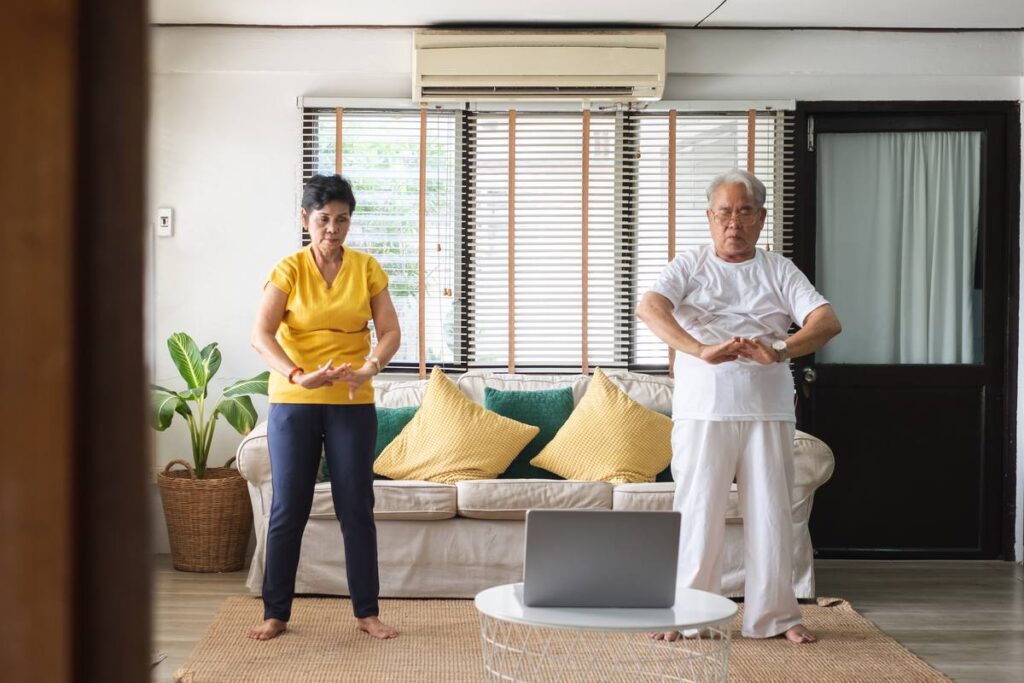
Filed Under: Tai Chi

How Tai Chi Supports Women Through Midlife Transitions

May 12, 2026 by Dr. Daniel Hoover

Midlife is a period of profound transition for many women. Physical changes, shifting energy levels, evolving roles, and emotional complexity often converge at the same time. During this stage, many women discover that the fitness and stress management strategies that once worked, no longer feel supportive. Tai Chi offers a different approach, one that emphasizes regulation and adaptability. Providing support for long-term resilience rather than intensity or control. 

Tai Chi’s principles align closely with the needs of women navigating midlife transitions.

Nervous System Regulation

One of the most valuable ways Tai Chi supports women during midlife is through nervous system regulation. Hormonal changes can heighten stress responses, disrupt sleep, and amplify emotional reactivity. Tai Chi directly addresses these challenges by calming the nervous system through slow, intentional movement and breath awareness.

Tai Chi supports nervous system regulation by encouraging the body to shift into a parasympathetic, or “rest-and-digest,” state. Through slow and controlled movement, Tai Chi helps reduce chronic muscle tension that often develops in response to prolonged stress. The practice also improves awareness of physical and emotional changes, making it easier to recognize signs of stress before they escalate. Over time, this increased body awareness can contribute to better emotional regulation and recovery from stressful experiences. Together, these effects help create a greater sense of balance between the body and mind. With regular practice, this regulation helps stabilize mood, improve sleep quality, and create a greater sense of emotional steadiness.

Rather than suppressing stress, Tai Chi teaches the body how to downshift naturally.

Balance and Bone Density

Midlife is often when concerns about balance and bone health become more pressing. Tai Chi’s emphasis on standing practice, weight shifting, and controlled transitions makes it especially effective for addressing both. Tai Chi supports balance and bone health through a combination of controlled movement and sustained physical engagement. Its weight-bearing postures help strengthen the legs and hips, which are important for stability and long-term joint support. The practice also trains proprioception, or the body’s awareness of its position in space, improving overall movement accuracy.

In addition, Tai Chi enhances coordination by requiring smooth transitions and controlled changes in direction during movement. Together, these effects can improve physical stability and reduce the risk of falls with time. These skills reduce fall risk and encourage confidence in movement. While Tai Chi is gentle, the consistent loading of bones through standing and shifting stimulates bone maintenance without the risks associated with high-impact exercise.

Emotional Well-Being

Emotional fluctuations are a common feature of midlife, influenced by hormonal shifts, changing life priorities, and accumulated stress. Tai Chi offers a powerful framework for emotional regulation by integrating movement with mindfulness. Through regular practice, women can learn to observe emotions without becoming overwhelmed by them. Tai Chi also helps release tension stored in the body through slow, controlled movement and mindful breathing. Gradually, these practices can cultivate greater patience, emotional balance, and self-compassion. 

Tai Chi’s slow pace creates space for emotional processing. Rather than pushing feelings aside, practitioners learn to move through them with awareness. This often leads to greater emotional clarity and a renewed sense of inner stability.

Energy Management

Many women in midlife report feeling depleted or inconsistent in their energy levels. Tai Chi addresses this not by demanding more output, but by teaching efficiency. Movement is guided by alignment, relaxation, and coordination rather than effort.

Tai Chi helps develop energy management skills by reducing unnecessary muscle tension during movement. The practice teaches practitioners to move from the center of the body rather than relying on isolated muscles for force and balance. Through continued development, Tai Chi encourages learning when to soften and conserve energy instead of pushing through tension unnecessarily. As a result, women often feel more energized after practice rather than exhausted. This efficient use of energy carries over into daily life, helping women meet responsibilities with less fatigue.

Sustainable Fitness for Long-Term Health

Perhaps the greatest strength of Tai Chi during midlife is its sustainability. Unlike high-intensity programs that may become unsustainable as the body changes, Tai Chi adapts easily to different needs and abilities.

Tai Chi offers low-impact movement that helps protect the joints while still improving strength and mobility. The intensity of the practice can be adjusted to fit different fitness levels without significantly reducing its benefits. Over time, Tai Chi continues to evolve with the practitioner, allowing the practice to adapt alongside changing physical and mental needs.

This makes Tai Chi an ideal companion through midlife and beyond. It supports strength, mobility, and emotional balance without placing excessive demands on the body.

A Practice That Meets Women Where They Are

Tai Chi does not ask women to fight change or reclaim a past version of themselves. Instead, it provides tools to navigate change skillfully. By improving nervous system regulation, balance, emotional health, and energy efficiency, Tai Chi supports women in building a strong and adaptable foundation for the years ahead.

Midlife transitions are not something to endure, they are an opportunity for refinement and growth. Tai Chi offers a steady, compassionate path through this stage, helping women move forward with confidence, clarity, and resilience.

Dr. Daniel Hoover, DC, LAc, MH, CCSP®, integrates a rare fusion of clinical expertise and martial mastery to elevate the health of his patients and students. As a Doctor of Chiropractic, Licensed Acupuncturist, and 5th degree black belt in Shaolin Kempo, Dr. Hoover serves as the Chief Tai Chi Chuan instructor at the School of Healing Martial Arts™. His journey as an Ironman and Master Herbalist informs his unique understanding of how the body thrives under disciplined practice. To expand his impact beyond the local clinic, Dr. Hoover developed online Tai Chi courses, making these traditional healing arts accessible for any wellness journey. If you are ready to begin, we invite you to explore Tai Chi Mastery under the expert guidance of Dr. Daniel Hoover.

Filed Under: Tai Chi

How Tai Chi Reduces Stress at a Nervous System Level

May 7, 2026 by Dr. Daniel Hoover

Stress is not just a mental experience, it is a physiological state driven by your nervous system. Tai Chi’s greatest strength lies in how directly it trains that system to shift out of chronic stress and into regulation. Rather than “relaxing” by distraction, Tai Chi teaches the body how to physically exit stress responses.

Understanding Stress as a Nervous System Pattern

Most modern stress is driven by prolonged activation of the sympathetic nervous system, which governs fight, flight, or freeze responses. When this system remains active for extended periods, it can lead to elevated cortisol levels and shallow breathing. It may also contribute to persistent muscle tension, increased pain, and heightened mental reactivity. Over time, this state can disrupt sleep quality and impair digestion.

Tai Chi works not by suppressing stress, but by gradually retraining the nervous system’s default state. Through slow movement and controlled breathing, it encourages a shift toward parasympathetic activity. This shift supports relaxation and recovery without force. Consistent practice helps restore balance between activation and rest.

Parasympathetic Activation Through Slow Movement

One of Tai Chi’s most researched benefits is its ability to activate the parasympathetic nervous system, often called the rest and digest response. It does this by slowing movement below stress thresholds and eliminating sudden acceleration or impact. Continuous and rhythmic motion is maintained while coordinating movement with breathing. This combination signals safety to the nervous system and allows stress responses to downshift naturally. Over time, the body begins to favor recovery states rather than prolonged activation.

 This supports overall regulation and long-term resilience.

Breath Regulation Without Force

Unlike breathing techniques that require conscious control, Tai Chi uses movement-led breath regulation. As practice deepens:

  • Breathing becomes slower and more diaphragmatic
  • Breath synchronizes organically with motion
  • Breath depth increases without effort

This is critical, because forced breathing can actually increase anxiety. Tai Chi allows the breath to regulate because the body feels safe.

Mindful Movement as Sensory Re-education

Tai Chi retrains awareness at the sensory level. Instead of focusing on thoughts, practitioners learn to track:

  • Weight shifts through the feet
  • Subtle changes in balance
  • Muscle tone and release
  • Continuous spatial awareness

This sensory focus interrupts rumination and worry loops, giving the mind something tangible to anchor to, without dissociation.

Cortisol Reduction Through Consistency

Regular Tai Chi practice has been shown to reduce baseline cortisol levels over time. This matters because cortisol affects:

  • Blood sugar regulation
  • Fat storage
  • Immune function
  • Sleep quality

Rather than providing temporary relief, Tai Chi lowers stress at the hormonal level through repetition and consistency.

Emotional Resilience, Not Emotional Suppression

Tai Chi does not numb emotions but builds emotional resilience by training the body to remain regulated as sensations arise. Over time, practitioners often experience faster recovery from emotional stress and reduced reactivity to triggers. They may also develop greater emotional clarity and a higher tolerance for uncertainty. This process supports more stable and adaptive responses.

This nervous-system-first approach makes Tai Chi foundational not only for stress relief, but also for anxiety management and sleep improvement, topics explored further in this cluster.

Dr. Daniel Hoover, DC, LAc, MH, CCSP®, integrates a rare fusion of clinical expertise and martial mastery to elevate the health of his patients and students. As a Doctor of Chiropractic, Licensed Acupuncturist, and 5th degree black belt in Shaolin Kempo, Dr. Hoover serves as the Chief Tai Chi Chuan instructor at the School of Healing Martial Arts™. His journey as an Ironman and Master Herbalist informs his unique understanding of how the body thrives under disciplined practice. To expand his impact beyond the local clinic, Dr. Hoover developed online Tai Chi courses, making these traditional healing arts accessible for any wellness journey. If you are ready to begin, we invite you to explore Tai Chi Mastery under the expert guidance of Dr. Daniel Hoover.

Filed Under: Tai Chi

How Tai Chi Improves Sleep Quality Naturally

May 5, 2026 by Dr. Daniel Hoover

Quality sleep is essential for physical health, emotional balance, and cognitive performance. Yet for many people, modern stress, overstimulation, and irregular routines interfere with the body’s natural ability to rest. Tai Chi offers a gentle, effective way to improve sleep quality by working directly with the nervous system rather than forcing relaxation.

Through slow movement, breath awareness, and consistent practice, Tai Chi helps the body and mind transition naturally into restorative rest.

Evening Nervous System Calming

One of the primary reasons Tai Chi improves sleep is its ability to calm the nervous system. Many people spend their days in a heightened state of alertness, driven by deadlines, screen exposure, and constant mental engagement. This chronic activation makes it difficult to unwind at night.

Tai Chi counteracts this by slowing physical movement and heart rate while promoting a more regulated physiological state. It helps release accumulated muscular tension that builds from daily stress. The practice also shifts the body from a stress response into a rest-and-digest state. Over time, this supports greater overall resilience and recovery.

Practicing Tai Chi in the early evening can serve as a bridge between daytime activity and nighttime rest. Rather than abruptly stopping activity, Tai Chi gradually guides the nervous system toward calm, making it easier to fall asleep later.

Breath Regulation Without Forcing

Breathing plays a central role in sleep quality, but forcing breathing techniques can sometimes increase anxiety rather than reduce it. Tai Chi takes a different approach by allowing breath to regulate itself as the body relaxes.

Breath regulation in Tai Chi involves encouraging slow and natural breathing while coordinating the breath with gentle movement. It also avoids breath holding or forced patterns that can create unnecessary tension. As movement becomes smoother and tension releases, breathing naturally deepens and slows. This shift signals safety to the nervous system and prepares the body for sleep without effort or control.

Reducing Mental Chatter

Racing thoughts are one of the most common barriers to falling asleep. Tai Chi helps quiet mental chatter by engaging the mind in a focused yet non-stimulating way. Tai Chi reduces mental overactivity by:

  • Directing attention to movement and sensation
  • Interrupting repetitive thought loops
  • Cultivating present-moment awareness

Because Tai Chi requires gentle concentration, it occupies the mind just enough to disengage from worries without creating mental strain. Over time, practitioners often find it easier to let go of intrusive thoughts when lying down to sleep.

The Power of Consistent Routines

Sleep thrives on consistency, and Tai Chi naturally supports routine-building through regular practice. Practicing at the same time each day, especially in the evening, creates a reliable signal that the day is winding down. This consistency helps reinforce healthy sleep cues and creates predictability for the nervous system. It also encourages the development of stable bedtime habits over time.

Even short sessions practiced consistently can have a meaningful impact. The body begins to associate Tai Chi with relaxation, making it easier to transition into sleep afterward.

Supporting the Sleep/Wake Cycle

Tai Chi supports the body’s natural sleep/wake cycle by promoting balance rather than sedation. Regular practice helps regulate stress hormones, improve circulation, and stabilize energy levels throughout the day.

Sleep wake cycle benefits of Tai Chi include reduced evening restlessness and improved daytime energy without overstimulation. It also supports more stable rhythms between periods of activity and rest. By improving overall nervous system function, Tai Chi helps restore natural patterns of sleepiness and alertness. This leads to deeper and more restorative sleep over time. 

A Natural Path to Better Sleep

Tai Chi does not promise instant sleep or force the body into rest. Instead, it creates the conditions for sleep to arise naturally. Through nervous system calming, gentle breath regulation, mental quieting, and consistent routines, Tai Chi supports sleep as an extension of daily balance.

For those seeking a sustainable, drug-free way to improve sleep quality, Tai Chi offers a steady and holistic solution, one that nurtures both rest and resilience over time.

Filed Under: Tai Chi

  • Page 1
  • Page 2
  • Page 3
  • Interim pages omitted …
  • Page 38
  • Go to Next Page »

Footer

Contact Us

SOHMA Integrative Medicine – Long Beach

Email

assistant@sohma.org

Follow Us on Instagram


WCAG

The Web Content Accessibility Guidelines (WCAG) defines requirements for designers and developers to improve accessibility for people with disabilities for websites, such as for SOHMA. It defines three levels of conformance: Level A, Level AA, and Level AAA. SOHMA is partially conformant with WCAG 2.1 level AA. Partially conformant means that some parts of the content do not fully conform to the accessibility standard.

Our goal here at SOHMA is to make our website accessible to all visitors; unfortunately, our goal for 100% accessibility is not yet complete. Our goal is to provide universal access to our website by following WCAG 2.0 (current WCAG 2.1) A, AA guidelines; however, this will be a work in progress.

Feedback

We welcome your feedback on the accessibility of SOHMA’s website. Please let us know if you encounter accessibility barriers on our website. We are here to help. You can reach us below at:

Email: assistant@sohma.org

Location: 2041 East St, Suite 1453, Concord, California, 94520, US

We try to respond to feedback within 5 business days.

sohma logo

Connect With Us

VA Authorized

SOHMA | Privacy Policy | Copyright © 2026

Designed by ITSOPRO