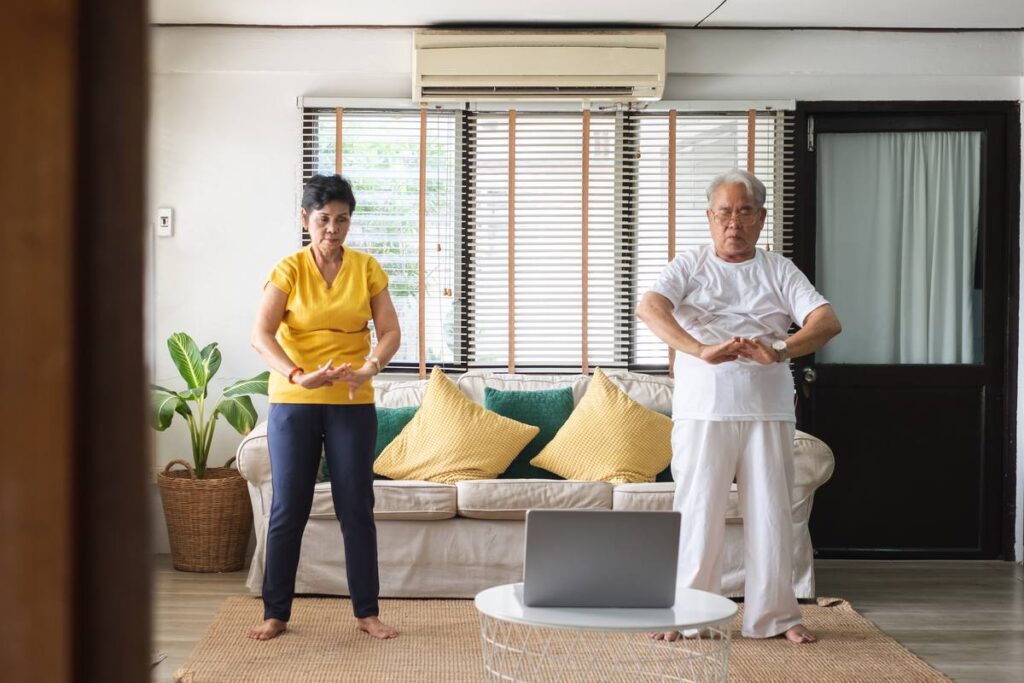
If you’ve ever watched someone move slowly and gracefully through a flowing sequence in a park and thought, “I’d love to be able to do that,” here’s the good news: you can begin today, right in your living room, with nothing but a little space and a few quiet minutes.
Tai Chi is one of the most accessible practices in the world to start. It requires no gym, no special equipment, and no prior athletic ability. And because the movements are slow, low-impact, and gentle on the joints, it’s a practice you can begin at almost any age or fitness level, and keep improving at for the rest of your life.
This guide walks you through exactly how to start Tai Chi at home, step by step, so your very first session feels calm, clear, and doable.
What Is Tai Chi and Why It’s Perfect to Start at Home
Tai Chi (short for Tai Chi Chuan, or taijiquan) is an ancient Chinese practice often described as “meditation in motion.” It blends slow, continuous movement, mindful breathing, and gentle mental focus into a single flowing practice. Originally developed as a martial art, today it’s practiced worldwide primarily for health, balance, calm, and longevity.
A few things make Tai Chi especially beginner-friendly at home. It’s low-impact. No jumping, no strain, no pounding on the joints. It’s quiet and self-contained. A small patch of floor is all you need. It builds gradually. You learn one movement at a time, so there’s no rush and no falling behind. It travels with you. Once you know a few movements, you can practice anywhere.
Research has linked regular Tai Chi practice to better balance, reduced stress, improved sleep, greater flexibility, and steadier focus. But you don’t need to memorize the science to begin, you just need to start moving.
What You Need to Begin (Almost Nothing)
One of the joys of Tai Chi is how little it asks of you to get going.
A little space roughly enough room to take a step in each direction and stretch your arms out. Comfortable clothing anything loose enough to move freely in. Flat, flexible shoes or bare feet and socks if your floor isn’t slippery and your balance is steady. A few minutes even 10 minutes is a real practice. And optionally, a little guidance a good video or instructor to follow along with.
That’s it. No mat, no weights, no membership required to take your first step.
How to Start Tai Chi at Home: 7 Simple Steps
Step 1 – Set Up Your Space
Choose a quiet spot with a bit of open floor and, ideally, some fresh air. Clear away anything you might bump into. If your balance is uncertain, practice near a wall, sturdy chair, or countertop you can rest a hand on.
Step 2 – Wear the Right Clothing
Put on loose, comfortable clothes and flat, flexible shoes. You want to feel connected to the floor, not wobbling on cushioned soles. Many practitioners eventually prefer to practice in socks or thin-soled shoes for that grounded feel.
Step 3 – Warm Up Gently
Never launch straight into practice cold. Spend two or three minutes loosening your neck, shoulders, wrists, hips, and knees with slow, easy circles. Gentle warm-up sequences like Ba Duan Jin (the “Eight Brocades”) are a beautiful way to prepare the body and settle the mind before Tai Chi.
Step 4 – Find Your Standing Posture
Before you move, learn to stand. Place your feet about shoulder-width apart, knees very slightly bent (never locked), spine long, shoulders relaxed, and the crown of your head gently lifted, as if suspended by a thread. Let your arms hang softly. This grounded, relaxed posture, sometimes called “rooting,” is the foundation of every Tai Chi movement.
Step 5 – Connect Your Breath to Your Movement
Breathe slowly and naturally through your nose, letting your belly (not your chest) expand on the inhale. As you begin to move, let the breath and the motion rise and fall together. You don’t need to force it, just notice it. This link between breath and movement is what transforms simple motions into Tai Chi.
Step 6 – Learn One or Two Beginner Movements
Resist the urge to learn everything at once. Start with a single, simple movement and repeat it slowly until it feels smooth. A classic first movement is “Commencement”: standing in your posture, slowly float both arms up to shoulder height on an inhale, then gently lower them on an exhale, as if pressing down through calm water. Repeat it a handful of times, staying soft and unhurried. Mastering one movement well beats rushing through ten.
Step 7 – Cool Down and Notice
Finish by standing quietly for a moment. Let your breathing settle and simply notice how your body and mind feel. This brief stillness is part of the practice, it’s where the calm sinks in.
How Often and How Long Should You Practice?
For beginners, two to three sessions per week is a great starting point, with each session as short as 10 to 15 minutes. As it becomes a habit, you can build toward daily practice and longer sessions.
Here’s the most important principle: consistency matters far more than duration. Ten focused minutes most days will take you much further than one long session every couple of weeks. Small and steady wins.
A Few Tips to Set Yourself Up for Success
Go slow, then go slower. In Tai Chi, slowing down is the skill. Rushing is the most common beginner mistake. Stay relaxed, not floppy. Aim for “alert ease,” like a cat about to move: soft but present. Don’t chase perfection. Your movements will feel awkward at first. That’s normal and temporary. Anchor it to a habit. Practice right after you wake up or before bed so it becomes automatic. Get some guidance early. Even occasional instruction helps you avoid ingraining small mistakes that are hard to unlearn later.
A Gentle Note on Safety
Tai Chi is gentle and widely considered safe for most people. Still, if you’re pregnant, recovering from an injury or surgery, or managing a chronic health condition, it’s wise to check with your healthcare provider before beginning any new movement practice. Move within a comfortable range, and never push into pain.
Common Questions About Starting Tai Chi at Home
Is Tai Chi hard to learn for beginners? Not to begin. The individual movements are slow and simple, which makes Tai Chi very approachable on day one. What takes time is refining the quality of those movements, but that’s the rewarding, lifelong part of the journey.
Can I really learn Tai Chi at home by myself? Yes, many people begin at home by following along with quality video instruction. That said, the fastest, safest progress usually comes from combining home practice with guidance from an experienced instructor who can correct your posture and help you avoid bad habits. For a deeper dive into this exact question, see our guide: Can You Learn Tai Chi at Home Without a Teacher?
What style of Tai Chi should a beginner start with? The Yang style is the most popular starting point worldwide, and the simplified 24-form was designed specifically to be accessible for beginners while still teaching authentic principles. It’s the form we teach and recommend at SOHMA.
How long before I notice benefits? Many people feel calmer and more relaxed after their very first session. Physical benefits like improved balance, flexibility, and sleep typically build over a few weeks to a few months of regular practice.
Do I need to be fit or flexible to start? No. Tai Chi meets you where you are and improves your strength, balance, and flexibility over time. Movements can even be modified to be done while seated if standing is difficult.
What’s the best time of day to practice? Whatever time you’ll actually stick to. Morning practice can energize your day; evening practice can help you unwind and sleep. Consistency beats timing.
Ready to Go Deeper? Join Tai Chi Mastery
Following along at home is a wonderful start, and having an expert guide you makes all the difference. Tai Chi Mastery is SOHMA’s online membership that takes you step by step from your very first movement through the complete Yang-style form, all under the guidance of Chief Instructor Dr. Daniel Hoover.
Inside the membership you’ll get structured, follow-along lessons you can practice on your own schedule, so you’re never guessing whether you’re doing it right. It’s the simplest way to turn today’s first steps into a lasting, confident practice.
Explore the Tai Chi Mastery membership and start your journey today.
About Dr. Daniel Hoover
Dr. Daniel Hoover, DC, LAc, MH, CCSP®, integrates a rare fusion of clinical expertise and martial mastery to elevate the health of his patients and students. As a Doctor of Chiropractic, Licensed Acupuncturist, and 5th degree black belt in Shaolin Kempo, Dr. Hoover serves as the Chief Tai Chi Chuan instructor at the School of Healing Martial Arts™. His journey as an Ironman and Master Herbalist informs his unique understanding of how the body thrives under disciplined practice. To expand his impact beyond the local clinic, Dr. Hoover developed online Tai Chi courses, making these traditional healing arts accessible for any wellness journey. If you are ready to begin, we invite you to explore Tai Chi Mastery under the expert guidance of Dr. Daniel Hoover.