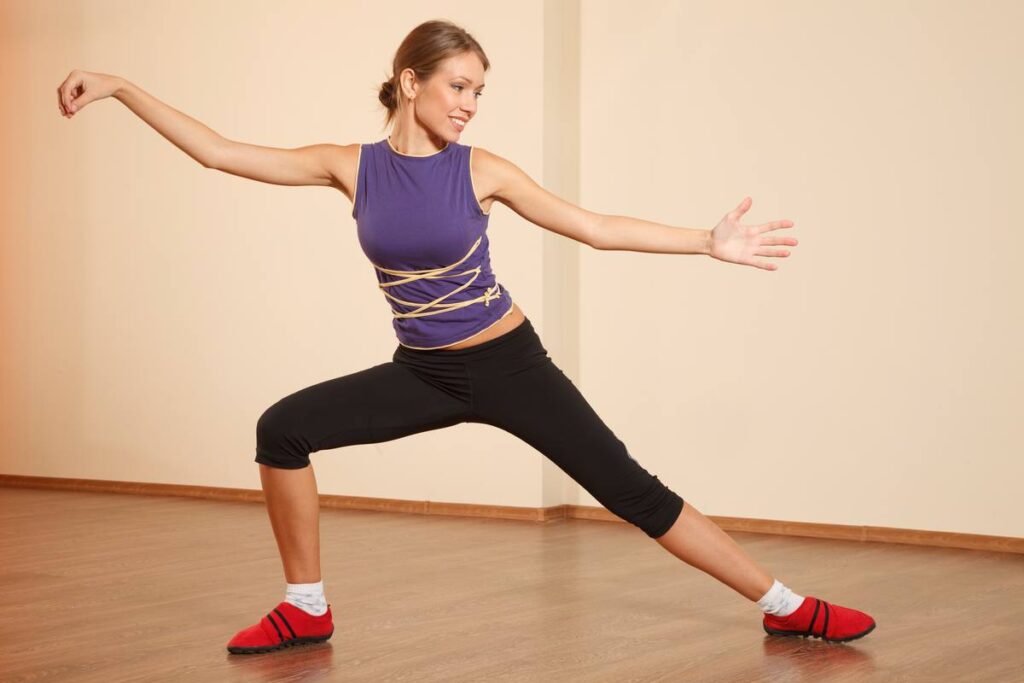
One of the quiet joys of Tai Chi is how little it asks of you to begin, and that includes your wardrobe. You almost certainly already own everything you need for your first practice. There’s no special uniform, no expensive gear, and no dress code to memorize. Still, a few simple choices can make your practice noticeably more comfortable, and this guide walks you through all of them.
The One Principle Behind It All
Nearly every clothing and footwear decision in Tai Chi comes down to a single idea: freedom of movement above, a grounded connection below.
Tai Chi involves slow, continuous motion through the hips, waist, shoulders, and knees, so your clothing should never restrict you. And because balance and rooting (your stable connection to the floor) are central to the practice, your feet want to feel the ground rather than float on cushioning. Keep those two ideas in mind and you’ll always choose well.
What to Wear: Clothing
Tops. Choose something loose and breathable that lets your arms and shoulders move freely, a soft t-shirt, a long-sleeve cotton top, or any relaxed athletic shirt works beautifully. Avoid anything tight across the shoulders or chest.
Bottoms. Loose, comfortable pants are ideal: cotton joggers, soft athletic pants, wide-legged trousers, or traditional Tai Chi pants. You want to be able to bend your knees deeply and step in any direction without the fabric pulling. Leggings are fine too, as long as they don’t restrict the knees.
Layers. Because Tai Chi is gentle and slow, you may not heat up the way you would in a vigorous workout, especially early on. A light layer you can remove is handy, particularly for morning or outdoor practice.
Seasons and settings. For outdoor practice, dress for the weather with breathable layers; a light jacket for cool mornings and sun protection for warm afternoons. Indoors, simply prioritize comfort and easy movement.
What to Wear: Shoes
Footwear is where a little knowledge helps most. A good Tai Chi shoe checks a few simple boxes.
Flat. Little to no heel elevation, so your weight stays evenly grounded. Flexible. The sole should bend with your foot, not hold it rigid. Thin-soled. Enough to feel the floor and sense your balance. Grippy. A sole that won’t slide as you shift and turn. Roomy. Space for your toes to spread and help you balance.
Popular choices include traditional cotton-soled Tai Chi shoes, thin canvas shoes, minimalist or “barefoot”-style trainers, and simple flat-soled sneakers you may already own. What matters is the qualities above, not the brand.
What About Practicing Barefoot or in Socks?
Practicing barefoot on a clean, non-slip surface is a lovely way to feel truly connected to the ground, and many experienced practitioners enjoy it. However, if your balance is uncertain, or you’re practicing on a slippery floor, choose a flat, grippy shoe instead. Avoid plain socks on smooth floors, they’re a slipping hazard. If you like the sock feel, look for grippy, non-slip socks.
What to Avoid
Tight jeans or restrictive pants that limit how deeply you can bend your knees. Thick, cushioned running shoes. Their raised, soft heels make it harder to feel grounded and can actually reduce your stability. High heels or stiff dress shoes (of course), and any shoe with an elevated heel. Slippery socks on smooth floors. Anything you’re fussing with. If you’re tugging at your clothing, it’s pulling your attention away from your practice.
Do You Need to Buy Special Gear?
Not at all, and please don’t feel you must. Comfortable clothes you already own and a flat, flexible pair of shoes are a perfect starting point. As your practice deepens over the months, you may want to invest in a dedicated pair of Tai Chi shoes or traditional attire, and that can be a fun part of the journey. But it’s entirely optional. The practice itself always matters more than the outfit.
Common Questions About What to Wear for Tai Chi
Can I wear regular workout clothes for Tai Chi? Yes. Any comfortable, loose athletic wear that lets you move freely is perfectly suitable.
What are the best shoes for Tai Chi? Flat, flexible, thin-soled shoes with good grip, such as traditional Tai Chi shoes, canvas shoes, minimalist trainers, or simple flat sneakers. Avoid thick, cushioned running shoes.
Can I do Tai Chi barefoot? Yes, on a clean, non-slip surface, and if your balance is steady. Barefoot practice helps you feel grounded. If you’re unsure of your footing, wear a flat, grippy shoe instead.
Do I need to buy a special Tai Chi uniform? No. There’s no required uniform for practice. Comfortable everyday clothing is completely fine, though some practitioners enjoy traditional attire later on.
What should I wear for outdoor Tai Chi? Breathable, weather-appropriate layers, sun protection in warm weather, and a light jacket for cool mornings, plus your usual flat, flexible footwear.
Dressed and Ready? Start Practicing with Tai Chi Mastery
Once you’re comfortable and grounded, the next step is simply to begin, whether that’s diving into our guide on how to start Tai Chi at home or walking into your first class. And having an expert lead the way makes all the difference. Tai Chi Mastery is SOHMA’s online membership that guides you step by step from your very first movement through the complete Yang-style form, under the instruction of Chief Instructor Dr. Daniel Hoover.
With follow-along lessons you can practice anytime, you’ll turn “I’m dressed and ready” into a confident, lasting practice.
Explore the Tai Chi Mastery membership and start moving today.
About Dr. Daniel Hoover
Dr. Daniel Hoover, DC, LAc, MH, CCSP®, integrates a rare fusion of clinical expertise and martial mastery to elevate the health of his patients and students. As a Doctor of Chiropractic, Licensed Acupuncturist, and 5th degree black belt in Shaolin Kempo, Dr. Hoover serves as the Chief Tai Chi Chuan instructor at the School of Healing Martial Arts™. His journey as an Ironman and Master Herbalist informs his unique understanding of how the body thrives under disciplined practice. To expand his impact beyond the local clinic, Dr. Hoover developed online Tai Chi courses, making these traditional healing arts accessible for any wellness journey. If you are ready to begin, we invite you to explore Tai Chi Mastery under the expert guidance of Dr. Daniel Hoover.