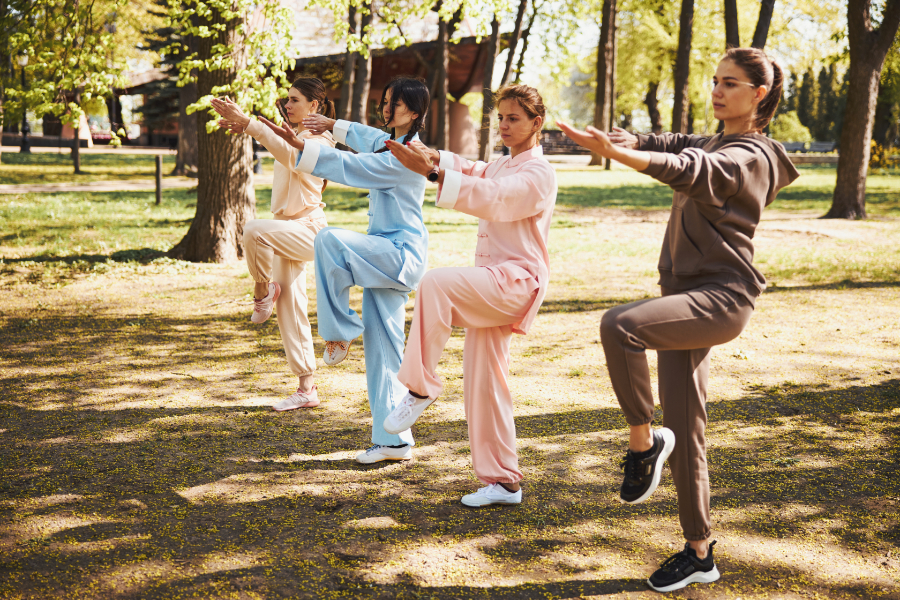
Proper posture supports efficient movements and reduces strain while influencing balance, and long term physical comfort. Tai Chi can help by using slow controlled repetitive motion to build coordination and stable alignment over time. This can encourage gradual nervous system adaptation which may help stabilize the body during day to day activities.
Subconscious Postural Control
Posture isn’t simply a matter of conscious alignment or even aesthetic correction. It’s a pattern that emerges from the nervous system’s ongoing integration of sensory information as well as your body’s motor responses. This pattern may exist below what we’re aware of and reflects how the body has learned to stabilize itself during activity and rest. While the classic instruction of “sit up straight” may address surface alignment, it does not meaningfully alter the underlying neural patterns that dictate how your posture is maintained as you age. Long term postural change often requires a process that engages sensory feedback, movement coordination and habitual neuromuscular responses rather than isolated instruction.
For example, progressive overload is a common muscle building principle that systematically increases stress placed upon the body during exercise to stimulate muscle growth. In this context, it can be understood as the gradual refinement of subconscious postural control through repeated, low intensity movements. These movement challenges can incrementally retain nervous system stability.
Small Adjustments in Posture
Micro adjustments form the practical mechanism through which posture reorganization occurs. Each deliberate movement and transfer of weight provides a subtle mind-body connection and balance sensing feedback. This allows the nervous system to refine stable responses in real time. Over repeated practice, these refinements accumulate as movement habits rather than deliberately correcting improper posture. It’s been shown that the slow, attentive movements through Tai Chi forms can enhance your body’s automatic postural response by strengthening your coordination, improving mobility and helping your body find balance.
Posture Under Active Movement versus Static Posture
Your posture is fundamentally different when you’re actively moving when compared to your posture when standing, or sitting still. Maintaining your balance during day to day activities requires constant adaptation to changing forces such as ground level, or even strong gusts of wind. Tai Chi helps to train this adaptability slowly, yet deliberately by embedding alignment within continuous transitions rather than maintaining fixed positions. As a result, your posture can become responsive and adaptive instead of rigid and stiff.
Lasting Posture Changes
Over time, posture changes can affect more than your appearance, it can help with comfort, allows for easier movement and can even change how a person carries themselves. Improved coordination can also lower extra muscle strain and support smoother walking, this is especially true for older adults, as one of the most common injuries for this demographic are accidental falls. Tai Chi is a great way to get started though it’s not a cure-all, however its approach aligns with the current understanding that lasting postural changes grow from repeated movement experienced instead of forced correction. Basically, the body slowly relearns balance and support through practice over time for better stability.
If you’re ready to build a consistent, meaningful Tai Chi practice, our membership program offers a clear path forward. Designed for both dedicated practitioners and those simply seeking better health and balance, our community provides expert instruction, progressive learning, and shared support. You can start by joining our Tai Chi Community for free and experience how ongoing practice and connection can elevate your journey.
