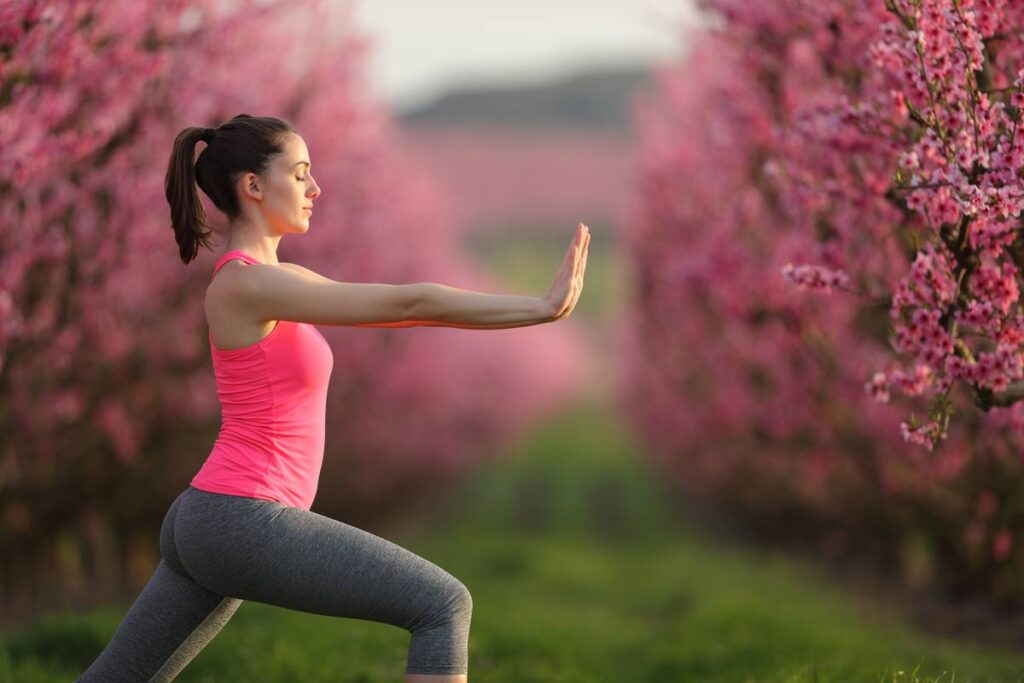
Aging powerfully is not about resisting time or pushing the body beyond its limits. It is about maintaining strength, clarity, mobility, and emotional balance as the years progress. Tai Chi offers a proven, sustainable path for both men and women who want to remain capable, confident, and independent throughout life. By addressing physical, cognitive, and emotional health together, Tai Chi supports aging as a process of refinement rather than decline.
Fall Prevention and Balance Confidence
Falls are one of the greatest threats to independence as people age. Tai Chi directly targets the skills needed to prevent falls by training balance in a controlled, progressive manner. Tai Chi improves fall prevention by strengthening the legs and hips through weight-bearing stances while training smooth weight shifts and directional changes. It also enhances proprioception and spatial awareness, which supports better balance control. These adaptations help reduce instability during everyday movement. Over time, practitioners develop greater confidence and coordination.
Because balance is trained dynamically rather than statically, practitioners develop confidence in movement rather than fear of instability. This confidence often carries into daily activities such as walking, climbing stairs, and navigating uneven surfaces.
Cognitive Health and Mental Sharpness
Tai Chi is as much a mental practice as a physical one. The coordination of movement, breath, and attention stimulates cognitive engagement and supports brain health.
Cognitive benefits of Tai Chi include improved focus and working memory, along with enhanced coordination between mind and body. It also helps reduce cognitive overload through sustained mindful attention. These effects support clearer thinking during both practice and daily activities. Over time, mental efficiency and awareness tend to improve.
Regular practice has been associated with improved mental clarity and reduced stress-related cognitive decline. By keeping the mind engaged without overstimulation, Tai Chi supports long-term mental resilience.
Joint Longevity and Pain Reduction
Joint health becomes increasingly important with age. Tai Chi’s low-impact, circular movements nourish joints while reducing unnecessary wear. Tai Chi supports joint longevity by encouraging even weight distribution and maintaining joint mobility without force. It also reduces chronic tension around the joints, which can contribute to long-term wear. These factors help preserve functional movement over time. Consistent practice supports stability and comfort during daily activity.
Over time, many practitioners experience less stiffness and discomfort, allowing them to stay active without relying on high-impact or joint-stressing activities.
Emotional Regulation and Stress Resilience
Emotional well-being is a critical yet often overlooked component of aging well. Tai Chi trains emotional regulation by calming the nervous system and promoting internal balance. Emotional benefits include:
- Reduced anxiety
- Reduced stress reactivity
- Improved mood stability
- Greater sense of calm
- Greater sense of self-awareness
By learning to relax under movement, practitioners develop emotional resilience that supports them through life changes, health challenges, and evolving roles.
Lifelong Movement and Independence
One of Tai Chi’s greatest strengths is its adaptability. The practice evolves with the practitioner, making it accessible at virtually any age or physical condition.
Tai Chi supports lifelong movement by allowing intensity to be adjusted without losing benefit and by developing strength, balance, and coordination simultaneously. It also encourages consistent practice without leading to burnout. This adaptability makes it a practical foundation for long-term physical health. Over time, it helps maintain independence, mobility, and confidence into later life.
Aging with Strength and Grace
Tai Chi reframes aging as an opportunity to move more efficiently, think more clearly, and live with greater emotional balance. For both men and women, it offers tools that support physical capability, mental sharpness, and inner stability over time.
By addressing fall prevention, cognitive health, joint longevity, emotional regulation, and sustainable movement, Tai Chi helps practitioners age powerfully, remaining active, engaged, and resilient throughout life. Dr. Daniel Hoover, DC, LAc, MH, CCSP®, integrates a rare fusion of clinical expertise and martial mastery to elevate the health of his patients and students. As a Doctor of Chiropractic, Licensed Acupuncturist, and 5th degree black belt in Shaolin Kempo, Dr. Hoover serves as the Chief Tai Chi Chuan instructor at the School of Healing Martial Arts™. His journey as an Ironman and Master Herbalist informs his unique understanding of how the body thrives under disciplined practice. To expand his impact beyond the local clinic, Dr. Hoover developed online Tai Chi courses, making these traditional healing arts accessible for any wellness journey. If you are ready to begin, we