• Skip to main content
  • Skip to footer

SOHMA Integrative Medicine

We offer the best of Eastern & Western medicine without using drugs or surgery

  • Tai Chi
    • Tai Chi Benefits
    • Tai Chi Instructors
    • Online Tai Chi Certification Program
  • Physical Medicine
    • Chiropractic Care
      • VA Authorized Care
      • Sports Medicine
      • Digital X-Rays
    • Physiotherapy
    • Spinal Decompression
    • Laser Therapy
    • Shockwave Therapy/Piezowave
    • Cupping Therapy
    • Acupuncture
    • Herbal Pharmacy
    • VA Authorized Care
  • Blogs
  • About
    • Our Providers
    • Tai Chi Instructors
  • Contact Us

SOHMA Interactive Medicine Pain

Can Non-Surgical Spinal Decompression Fix a Bulging Disc?

July 18, 2022 by Dr. Daniel Hoover

Spinal Decompression is a Non-Invasive Therapy that Could Help With Many Back Problems

Lower back pain affects millions of Americans every year, usually caused by injury, improper posture, or lack of exercise. Occasionally it can be dealt with, with bed rest, stretching, or a heating pad. But sometimes it can be the result of a bulging disc, and many people may not even realize it.

What is a bulging disc? How does it occur? And can non-surgical spinal decompression fix a bulging disc?

Join me as we answer these questions and explore non-surgical spinal decompression as a treatment for a bulging disc.

What is a Bulging Disc?  


A bulging disc is a condition that usually develops as we age and over long periods of time. Though younger people can still be afflicted with bulging discs too. A bulging disc also called a herniated, or protruding disc occurs when the soft tissue known as spinal discs between the spine becomes compressed. The spine consists of a series of vertebrae which are a series of interlocking bones. Vertebrae provide the spine with support when moving or bending your back.

Spinal discs act as shock absorbers that prevent vertebrae from rubbing against each other. Compression of the spinal disc can cause it to bulge and can lead to damage to the spinal cord and nerve roots which can cause reduced mobility and cause pain.

Bulging discs occur most commonly in the lower lumbar spine, so the pain and discomfort is usually felt in your lower back. 

Symptoms of a Bulging Disc

Early identification of a bulging disc is only possible with medical testing which shows any changes in the shape and positioning of the spinal disc. And there are very few early symptoms to suggest your spine is being compressed to the point of herniating a disc. Depending on the severity and location in the spine, the symptoms of a bulging disc can fluctuate in severity. Many people have little to no initial symptoms, though as the disc degenerates and bulges a patient may have symptoms including:

  • Back muscle spasms
  • Weakness in your legs and feet
  • Sciatica
  • Poor coordination
  • Reduced mobility and difficulty walking
  • Reduced control over bowel and bladder
  • Increased pain when moving

If you have had some of these symptoms contact your primary care provider to see if you have a bulging disc. If you have lost control of your bowel or bladder you may require immediate attention as this can happen when too much pressure builds up the spinal nerve roots, which is considered a medical emergency.

How can Non-Surgical Spinal Decompression help?

Can non-surgical spinal decompression heal a bulging disc?

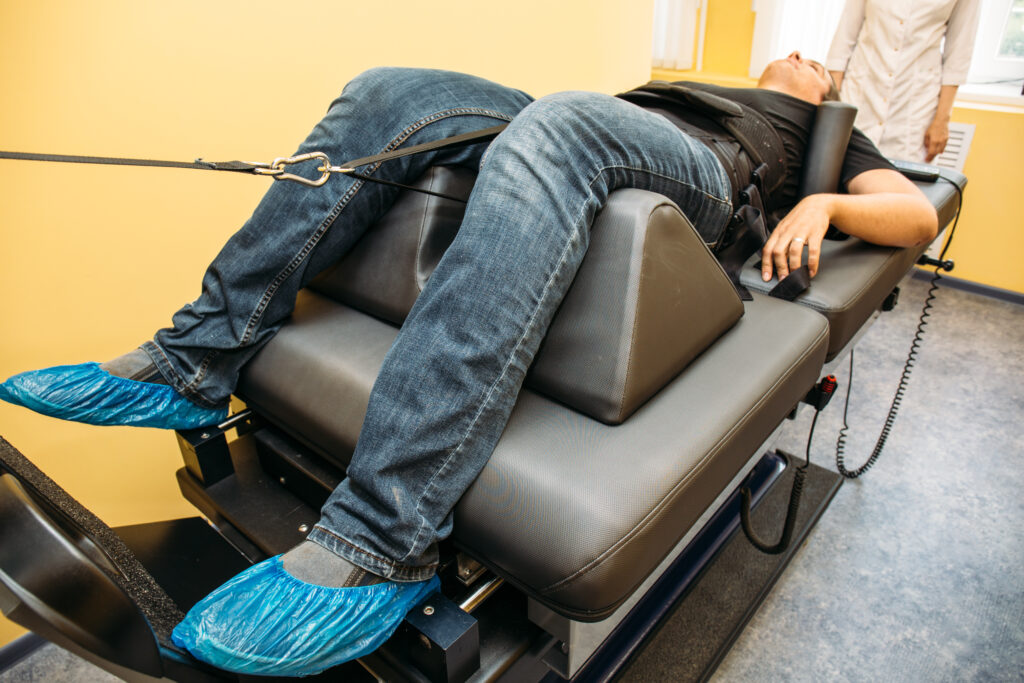
As previously stated, building discs often occur when the spine is under too much pressure and begins to compress. Before treatment begins information including height, weight, and spinal condition, how long they’ve had their symptoms, and how much pain they are in is analyzed so the computer can monitor your body’s reactions. Non-surgical decompression therapy works by securing the patient on a specialized decompression table called spinal traction. The patient is fitted with a harness that holds the abdomen and the pelvis. The spinal traction then stretches and relaxes the patient’s back intermittently to achieve the perfect amount of tension needed to gently decompress the spine.

Non-surgical spinal decompression therapy can aid in correcting a bulging disc or a disc that has slipped out of place completely. As the spine is being decompressed, a small amount of negative pressure allows the spinal disc to naturally return to its original position.

Non-surgical spinal decompression is a gentle, non-invasive way to help heal your pain so you can get back to your life.

Take the Next Step In Improving Your Health by Contacting SOHMA Integrative Medicine

Our goal is to help you improve your health. You can reach out to us and ask us about the Myers Cocktail, IV Therapy, Chiropractic care, or how our other health service lines can help you with your journey to improved health. 

Located in Long Beach, CA we help individuals from the surrounding cities.

We look forward to helping you take the next step in your journey to better health.

Filed Under: Therapy Tagged With: SOHMA Interactive Medicine, SOHMA Interactive Medicine Pain, SOHMA Long Beach, Spinal Decompression

Treatment Options for Peripheral Neuropathy

June 28, 2022 by Dr. Daniel Hoover

Peripheral neuropathy has symptoms of numbness in the extremities.

For us to understand why certain treatments are used for peripheral neuropathy, we should first try to understand this condition. Peripheral neuropathy is an umbrella term used to describe the condition of damaged nerves that result in poor communication from the brain and spinal cord to the rest of the body. There are over 3 million cases of peripheral neuropathy in the US every year making this condition fairly common. Some people can have no symptoms, however, those who do show symptoms may feel pain, numbness, the feeling of pins and needles, and weakness. It is also common for people to suffer from poor balance, slow reflexes, and tingling in the hands and feet.

Today we’re going to go over the common causes and what treatment options are available for peripheral neuropathy.

What Causes Peripheral Neuropathy?

Peripheral neuropathy can be caused by many different events. Traumatic injuries such as car accidents, falls, sports injuries or medical procedures may damage the nerve by stretching, compressing, or severing the nerve from the spinal cord. Bacterial and viral infections such as HIV, hepatitis B and C, Lyme disease, shingles or leprosy can also damage nerves. 

Being exposed to toxins like cigarette smoke which can affect your blood circulation may raise your risk of developing peripheral neuropathy. Alcohol makes it more difficult for the body to absorb necessary nutrients like B12 and protein, forcing the body to prioritize important organs over nerves to the arms and legs.

Diseases like diabetes, kidney disease, liver disease or hypothyroidism. Swelling caused by these diseases likely causes swelling, putting pressure on peripheral nerves most commonly happening in the hands and wrists.

What Treatment Options are There?

Much like the causes of peripheral neuropathy, there are varied treatment options based on the severity of the condition. Pain relievers, lifestyle changes, topical treatment, physical therapy PRP (platelet rich plasma) therapy, HCT/P (human cellular tissue product) injections, acupuncture or surgery.

Making healthier lifestyle choices and habits is the simplest way to prevent peripheral neuropathy and support healthy nerves. Eating healthy foods, regularly exercising and avoiding common causes of nerve damage. Fruits, vegetables, whole grain, and lean protein promote healthy nerves. Lean meats, fish, eggs and low-fat dairy are high in vitamin B12 which can protect against B12 deficiency. For vegans or vegetarians, look for foods fortified with vitamin B12 or talk to your primary care provider about B12 supplements. If able to exercise, attempt to commit an hour and a half to 3 hours of exercise about 3 times a week. You are also welcome to join our Tai Chi classes for beginners on Sundays from 9:30am to 10:30am at Heartwell Park in Long Beach CA, we’re by the duck lake. Avoid habits like drinking alcohol or smoking as these toxins can cause damaged nerves.

At SOHMA we offer HCT/P injections which may be covered by medicare. HCT/P injections work by encouraging your body to heal damaged tissue. HCT/p rejuvenates, repairs or replaces damaged cells. Days following treatment new cells can grow and divide forming new tissue to aid in healing the damaged or injured area. Healing you from within the body. 

PRP is a concentrate of platelet-rich plasma protein that is derived from the patient’s own blood. It can be used in the affected area to trigger the body to begin repairing the damage in the nerves. Platelets promote regeneration in the tissue and can shorten the amount of time needed to repair nerve damage.

Feel free to ask the helpful staff at SOHMA any questions about how we can help you heal from peripheral neuropathy.

Take the Next Step In Improving Your Health by Contacting SOHMA Integrative Medicine

Our goal is to help you improve your health. You can reach out to us and ask us about the Myers Cocktail, IV Therapy, Chiropractic care, or how our other health service lines can help you with your journey to improved health. 

Located in Long Beach, CA we help individuals from the surrounding cities.

We look forward to helping you take the next step in your journey to better health.

Filed Under: Therapy Tagged With: IV Therapy, peripheral neuropathy, peripheral neuropathy treatment, SOHMA Interactive Medicine, SOHMA Interactive Medicine Pain

What are the Types of IV Therapy

June 14, 2022 by Dr. Daniel Hoover

Vitamin Therapy IV Drip Infusion In Man Blood

Before getting into the types of iv therapy, let’s first talk about what is IV therapy. You probably know that IV drips are traditionally used in hospitals in order to administer fluids and medicines directly to the patient’s bloodstream. IV therapy is essentially the same thing with the exception that instead of medicine you are being administered fluids, nutrients, or ozone. 

At SOHMA Integrative Medicine in Long Beach we offer two forms of IV therapy, the Myer’s cocktail, and Ozone therapy. Join us as we go through why IV therapy is growing in popularity and the benefits of these IV therapies.

Rapid Absorption

When consuming supplements orally it is unlikely that you are absorbing all the nutrients you think you may be consuming. The reason being is when consumed orally your body digests and metabolizes the supplements which significantly reduces the amounts of vitamins, minerals, and nutrients that enter the bloodstream. 

With IV therapy, you bypass the digestive system. When nutrients are administered directly to the bloodstream via IV, your body can make use of the fluids and nutrients immediately. Many patients notice a boost of energy, relaxed with less tension as well as improvement in their mood.

Ozone Therapy

Ozone is typically thought of as a gas in the upper atmosphere that protects us from the sun’s harmful ultraviolet radiation. But it can be used therapeutically as well. Ozone has amazing anti-inflammatory properties and can act as a disinfectant. Ozone therapy aids the body in preventing tissue damage and improves local blood circulation. 

The immune system can become stimulated to aid healing after a short 30-minute session. Improved blood circulation through Ozone therapy may clean your arteries from potential viral and bacterial infections by oxidizing the toxins. Inflammation can cause oxidative stress which can cause pain and irritation. Ozone therapy can bring balance caused by oxidative stress and greatly improve pain caused by inflammation.

Even when taking necessary precautions, toxins build up in the body of everyone. Usually caused when absorbing pollution from smoke, heavy metals, or other chemicals in our daily lives. When built up in the body these toxins can have many adverse effects including the body’s ability to heal itself. Improving your diet and exercising can slow down the accumulation of toxins, though when living in a big city, a build-up can be unavoidable. Ozone therapy detoxification can help with:

  • Chronic Fatigue
  • Respiratory Problems
  • Joint Pain
  • Allergies
  • Skin Conditions
  • Digestive Issues
  • Insomnia

The Myer’s Cocktail

The Myer’s cocktail is a perfectly crafted blend of Vitamin C, B Complex, Magnesium, and Calcium delivered via IV drip. Usually as one gets older their body loses the ability to absorb nutrients the way it did when it was younger. Your body begins to need different nutrients and vitamins which are often necessary to manage proper immune system health and energy levels. 

IV therapy dispenses a high dose of vitamins directly to the bloodstream without causing any significant discomfort. The blend of vitamins and nutrients can be used by the patient’s body to:

  • Boost Immune System
  • Ease Anxiety
  • Promote Relaxation
  • Hydrate
  • Aid with Migraine Pains
  • Detoxify the Body

The Myer’s cocktail has been frequently used to aid in the treatment of respiratory problems, migraine, fatigue, fibromyalgia, and other conditions. If you need more information feel free to ask the helpful staff at SOHMA any questions you may have.

Take the Next Step In Improving Your Health by Contacting SOHMA Integrative Medicine

Our goal is to help you improve your health. You can reach out to us and ask us about the Myers Cocktail, IV Therapy, Chiropractic care, or how our other health service lines can help you with your journey to improved health. 

Located in Long Beach, CA we help individuals from the surrounding cities.

We look forward to helping you take the next step in your journey to better health.
Filed Under: Therapy Tagged With: IV Therapy, SOHMA Interactive Medicine, SOHMA Interactive Medicine Pain, SOHMA Long Beach

Joint Injections for Knee Injuries

May 13, 2022 by Dr. Daniel Hoover

Joint injections in knees can help increase recovery from injury and even improve ailments without surgery.

Your knees are some of the most important joints in your body. We use them to walk, run and jump. Keeping your knees healthy is one of the best ways to maintain mobility. Unfortunately as we age the risk of injuring our knees becomes greater. Knee injuries go farther than just a simple sprain where you can recover with some rest. 

In today’s article we’re going to go over what joint injections we offer at SOHMA of Long Beach CA, and what they can do to help you recover from knee injuries.

Knee Injuries that Joint Injections can Treat

Let me preface this by saying that joint injections do not treat all injuries. If there is a fracture or a severe tear you may require surgery however, post surgery joint injections have been shown to help recovery times. PRP therapy has been used by doctors to help patients heal faster after surgical procedures. It has been shown to shorten recovery times by days, in some cases even weeks.

Your knees are a major joint in the body, making it a common area to sustain injury. Some of the more common injuries that have been treated with HCTPs or PRP include:

  • Arthritis
  • Trauma
  • Ligament or Muscle Tear
  • Ligament or Muscle Strain
  • Muscle Pain
  • Inflammation
  • Chronic Knee Pain

Relatively minor accidents can result in knee injury. For older adults a slip or fall can cause life altering fractures or dislocation.

What are Joint Injections?

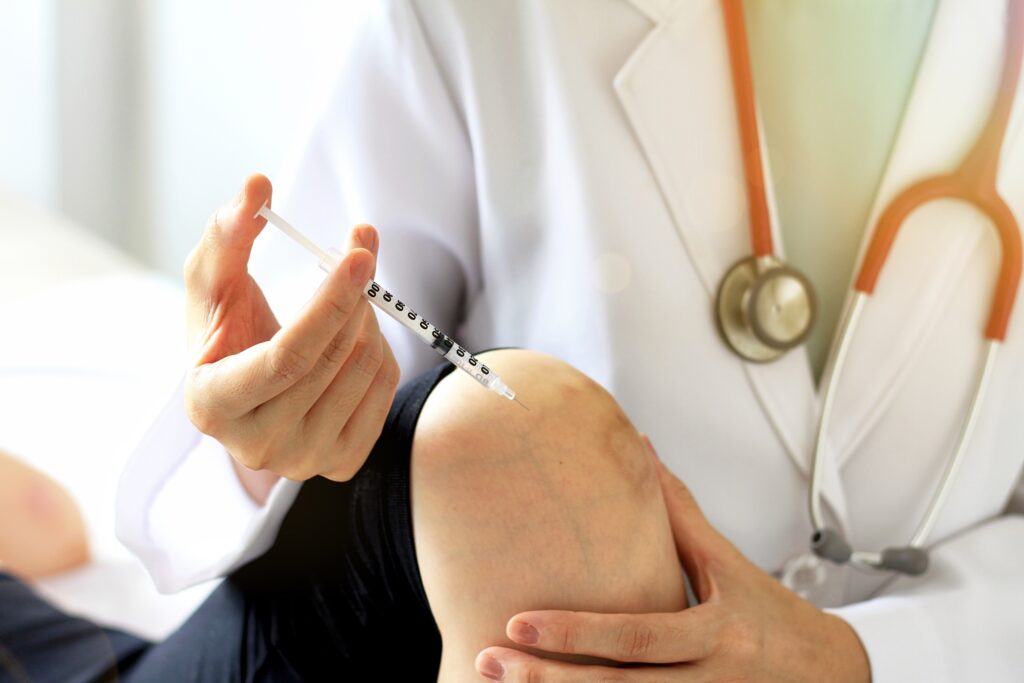
Starting off with the basics, joint injections are as the name suggests, they are injections that are used to help in recovery from joint conditions. At SOHMA we offer both Human Cellular Tissue Products (HCTPs) or Platelet Rich Plasma (PRP). HCTP injections can aid the body in healing damage on its own without the need for surgeries. Tissue can be regrown to its former strength and recover the functions in highly used areas of the body such the spine, hips, shoulder, knees and other major joints. In PRP therapy, blood is drawn from the patient into a vial and separated in a centrifuge. Once separated, we draw the PRP from the vail and use it in the treatment. Meaning its the patient’s own platelets being used in areas that need healing support like  muscles and joints.

Long Term Effects of Knee Injuries

As stated previously there are many different types of injuries one can sustain in the knees. Depending on the type of injury sustained, as well as how long the patient went without treatment, long term effects can vary. If left untreated, knee injuries can lead to many mobility problems, pain, and early onset of arthritis.

A decrease in range of motion of the knees can make you unable to bend the knee fully or completely straighten the knee out. When you lose mobility in your knees the decreased mobility makes running nearly impossible and walking becomes difficult and puts you at risk of further injury due to loss of balance. Sitting and standing from chairs can also become uncomfortable and difficult.

Arthritis usually is thought of as something that affects older adults. Due to it being associated with aging and natural wear and tear. Injury suffered at a young age has been shown to increase the risk of early onset osteoarthritis. Sport related injuries like ACL or meniscus tears are often associated with a form of post-traumatic form of osteoarthritis.

Take the Next Step In Improving Your Health by Contacting SOHMA Integrative Medicine

Our goal is to help you improve your health. You can reach out to us and ask us about the Myers Cocktail, IV Therapy, Chiropractic care, or how our other health service lines can help you with your journey to improved health. 

Located in Long Beach, CA we help individuals from the surrounding cities.

We look forward to helping you take the next step in your journey to better health.
Filed Under: Therapy Tagged With: Joint Injection, rehabilitation, sohma, SOHMA Interactive Medicine, SOHMA Interactive Medicine Pain, SOHMA Long Beach

What Are the Side Effects of Spinal Decompression?

April 30, 2022 by Dr. Daniel Hoover

Back pain may be treated by spinal decompression with little to no side effects.

Non-surgical Spinal Decompression can help with many pains and aches you may be suffering due to diseases or sitting for long periods of time, as your spine is being compressed by gravity. 

We have gone over if non-surgical Spinal Decompression is good for your spine, but perhaps you are wondering if there are any side effects to non-surgical Spinal Decompression. If there are, then what are they?

Today we’re going to cover what you should expect after Spinal Decompression therapy as well as any side effects you may be worried about.

How is Spinal Decompression Performed?

We should first start by answering how this therapy is performed. The patient is set up on a specialized decompression table called a spinal traction. The patient is then gently stretched in intervals according to each individual patient’s treatment. During the treatment the patient is fully dressed and takes only about 30 to 45 minutes.

This therapy has been shown to be an effective treatment that brings relief to patients with a wide variety of neck and back problems. The decompression pressure from the spinal traction may retract disc bulges and disc protrusions. Which can reduce pressure from nearby nerves and encourage blood flow. Increased blood flow brings oxygen with it which promotes healing.

What are the Side Effects?

With any treatment, therapy or procedure there are bound to be some side effects regardless of how minimally invasive it is, however the majority of patients do not experience any serious side effects from non-surgical Spinal Decompression. 

The most common side effects would be dull aches for the first couple weeks as the body adjusts to the decompression. Spinal Decompression stretches the back muscles in a direction that they are not accustomed to. This may leave some patients feeling the same type of soreness one would feel after a particularly hard day at  the gym.

On rare occasions Spinal Decompression can cause muscle spasms, or pain going down the patient’s arms and legs. 

Is Spinal Decompression for Me?

As an alternative to spinal decompression surgery, this non-invasive therapy is quite alluring. Although there is no significant recovery time from non-surgical Spinal Decompression some patients may require 4 to 6 weeks for treatment to be complete before they experience lasting relief which can be too slow for some people. 

Non-surgical Spinal Decompression therapy has been gaining popularity quickly. Many physical benefits like increased mobility, improved joint flexibility and general pain reduction have been well documented. Other benefits of choosing non-surgical Spinal Decompression over something invasive include removing the risk of having post surgery infections. Patients are not required to take any additional medication or painkillers. Once treatment is completed, non-surgical Spinal Decompression provides lasting natural pain relief whereas painkillers only reduce pain while it is active in your body. When compared to surgery, this treatment is  safer, faster and requires no downtime compared to post surgery recovery times. 

As safe as non-surgical Spinal Decompression is, there are some people who should ask their primary care provider before deciding to receive Spinal Decompression therapy these include:

  • Pregnant Woman
  • Patients with degeneration of the spine
  • Patients with severe osteoporosis
  • Patients with surgical implants (screws, rods, plates etc.)
  • Patients with severe nerve damage
  • Patients who have had spinal fusion surgery
  • Patients with tumors
  • Patients with spinal fractures.

To avoid as many risks as possible the patient may be asked to undergo screening tests to rule out any of the conditions listed above. Feel free to ask the staff at SOHMA of Long Beach CA if you have any questions or concerns regarding Spinal Decompression.

Take the Next Step In Improving Your Health by Contacting SOHMA Integrative Medicine

Our goal is to help you improve your health. You can reach out to us and ask us about the Myers Cocktail, IV Therapy, Chiropractic care, or how our other health service lines can help you with your journey to improved health. 

Located in Long Beach, CA we help individuals from the surrounding cities.

We look forward to helping you take the next step in your journey to better health

Filed Under: Therapy Tagged With: rehabilitation, SOHMA Interactive Medicine, SOHMA Interactive Medicine Pain, SOHMA Long Beach, Spinal Decompression

  • « Go to Previous Page
  • Page 1
  • Interim pages omitted …
  • Page 3
  • Page 4
  • Page 5
  • Page 6
  • Page 7
  • Interim pages omitted …
  • Page 10
  • Go to Next Page »

Footer

Contact Us

SOHMA Integrative Medicine – Long Beach

Email
drdanielhoover@sohma.org

Follow Us on Instagram Instagram


WCAG

The Web Content Accessibility Guidelines (WCAG) defines requirements for designers and developers to improve accessibility for people with disabilities for websites, such as for SOHMA Integrative Health Center. It defines three levels of conformance: Level A, Level AA, and Level AAA. SOHMA is partially conformant with WCAG 2.1 level AA. Partially conformant means that some parts of the content do not fully conform to the accessibility standard.

Our goal here at SOHMA is to make our website accessible to all visitors; unfortunately, our goal for 100% accessibility is not yet complete. Our goal is to provide universal access to our website by following WCAG 2.0 (current WCAG 2.1) A, AA guidelines; however, this will be a work in progress.

Feedback

We welcome your feedback on the accessibility of SOHMA’s website. Please let us know if you encounter accessibility barriers on our website. We are here to help. You can reach us below at:

  • Email: assistant@sohma.org

  • Location: 2041 East St, Suite 1453, Concord, California, 94520, US

We try to respond to feedback within 5 business days.

SOHMA Integrative Medicine

Connect With Us

VA Authorized

SOHMA | Privacy Policy | Copyright © 2026

Designed by ITSOPRO