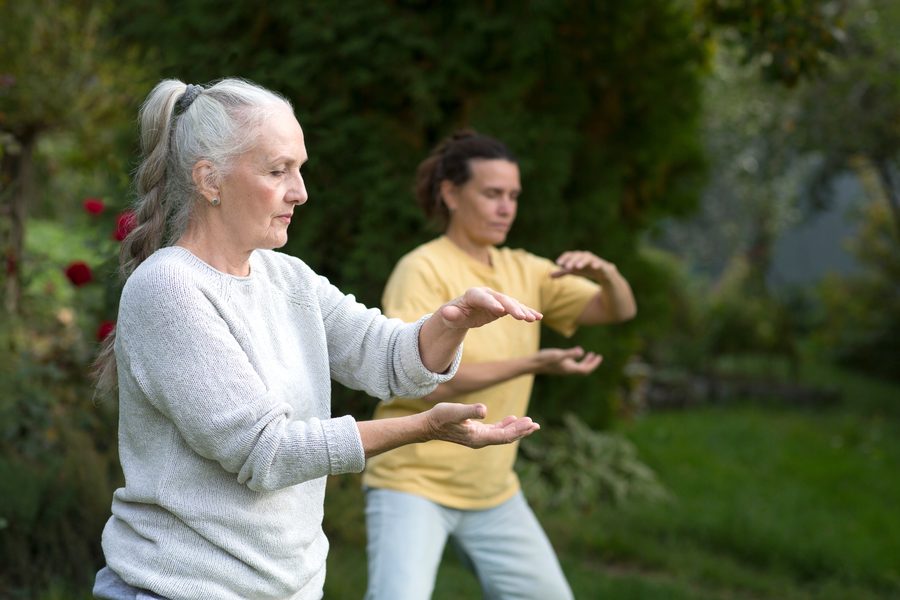
Ask most people what separates a beginner from an advanced Tai Chi practitioner and you’ll get answers like cleaner forms, deeper stances, better balance. Those things matter, but they’re not really the answer.
The quality that most reliably distinguishes advanced practitioners is something called listening awareness, or Ting in classical Tai Chi. It rarely gets emphasized early enough, and it’s the skill that changes everything once it develops. It’s also central to advancing your Tai Chi practice beyond the form.
What Is Listening Awareness?
Listening awareness isn’t about hearing. It’s about sensing, feeling weight shifts, subtle pressure changes, balance adjustments, and tension patterns as they’re happening, not after the fact.
Beginners focus on doing the movement correctly. Advanced practitioners focus on sensing how the movement unfolds. That’s a significant difference, one is externally oriented, the other is fundamentally internal. This shift is one of the most important transitions described in how real Tai Chi skill is developed.
Why It’s So Often Missed
Listening awareness is subtle and doesn’t produce immediately visible results. When you’re learning a new form or correcting a stance, you have something concrete to show for your effort. When you’re developing sensitivity, the progress is quiet.
There’s also a tendency to equate progress with acquiring new material, new forms, new techniques. Listening develops in the opposite direction: by doing less, more slowly, with more attention. It’s not a dramatic path, which is probably why it gets underemphasized even in discussions about advancing your Tai Chi practice.
How Listening Awareness Changes Movement
Once listening awareness starts to develop, movement shifts in a fundamental way. Instead of executing technique, you’re responding to what’s actually happening. You feel a balance shift beginning and can address it before it becomes a problem. You notice tension starting to build and can release it before it disrupts the flow.
This isn’t just about being smoother. It’s about being adaptive. Movement becomes genuinely responsive rather than performed.
Listening Awareness in Partner Work
In push hands practice, Ting becomes unmistakable. Beginners rely on strength and anticipation, they’re guessing and reacting. Advanced practitioners listen through physical contact. They feel direction, pressure, and intent, and they respond to what’s real rather than what they expected.
This is what allows a smaller practitioner to redirect a larger one effectively, not through superior strength, but through superior sensitivity. You can only redirect what you can actually feel. This sensitivity is a hallmark of the kind of real skill development in Tai Chi that goes beyond form and technique.
Developing Listening Awareness in Solo Practice
Partner work isn’t a prerequisite. Listening awareness can be developed alone, primarily by slowing down and paying genuine attention to transitions.
Simple practices: pause briefly between movements and notice what’s actually there, where your weight is, what tension remains, where your attention has drifted. Or reduce the size of your movements to amplify sensation. Smaller movements require more sensitivity to feel, which trains exactly the quality you’re after.
The Role of Stillness
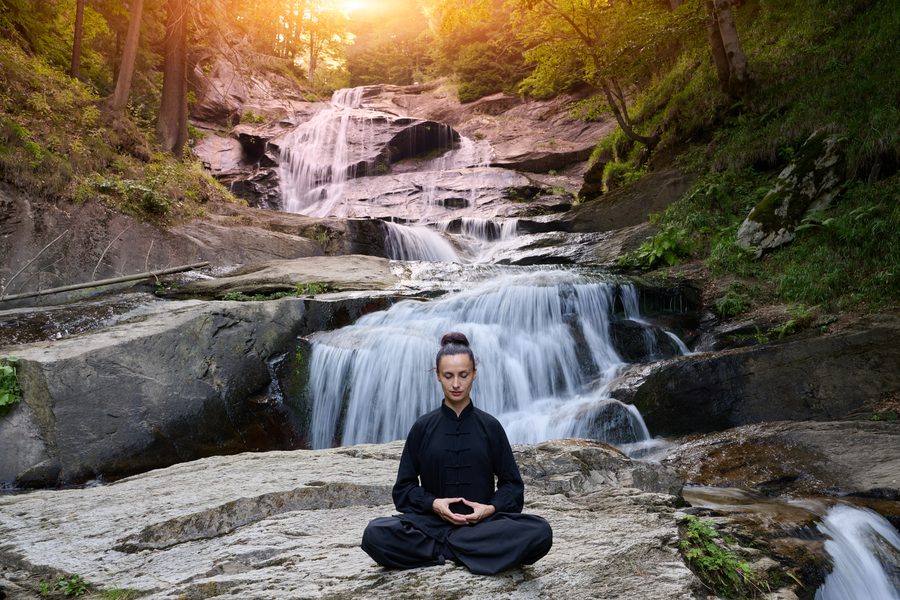
Stillness is one of the most underrated tools in Tai Chi training. Moments of quiet standing practice, no movement, just attention, allow you to sense alignment, breath, and weight distribution with unusual clarity.
These still intervals sharpen perception in a way that’s hard to replicate through movement alone. Over time, the sensitivity developed in stillness starts to carry naturally into practice. It’s a theme explored further in this guide on advancing your Tai Chi practice beyond the form.
Why This Skill Defines Advancement
Listening awareness is what transforms Tai Chi from something performed into something inhabited. Without it, even technically precise practice remains on the surface. With it, practice becomes alive and adaptive.
This isn’t a skill you can rush. But it can be cultivated, with patience, slowness, and a willingness to value what you feel over what you see. That’s ultimately what real Tai Chi skill development is all about.
We invite you to take your Tai Chi to the next level through our membership program. Whether you want to eventually become a certified Tai Chi instructor or you just want to ensure you are in the best shape of your life using Tai Chi, our membership and community will help you with educational videos and a path to your best health. You can get started with our Tai Chi Community for free to see what the community is talking about.