• Skip to main content
  • Skip to footer

SOHMA Integrative Medicine

We offer the best of Eastern & Western medicine without using drugs or surgery

  • Tai Chi
    • Tai Chi Benefits
    • Tai Chi Instructors
    • Online Tai Chi Certification Program
  • Physical Medicine
    • Chiropractic Care
      • VA Authorized Care
      • Sports Medicine
      • Digital X-Rays
    • Physiotherapy
    • Spinal Decompression
    • Laser Therapy
    • Shockwave Therapy/Piezowave
    • Cupping Therapy
    • Acupuncture
    • Herbal Pharmacy
    • VA Authorized Care
  • Blogs
  • About
    • Our Providers
    • Tai Chi Instructors
  • Contact Us

Dr. Daniel Hoover

How Long Does It Really Take to Become a Tai Chi Instructor?

January 16, 2026 by Dr. Daniel Hoover

One of the most common questions among serious Tai Chi practitioners is how long it truly takes to become an instructor. The honest answer is not a simple number of years, because teaching readiness is not determined by time alone. Becoming a Tai Chi instructor is a developmental process shaped by consistency, quality of training, depth of understanding, and teaching maturity. This article breaks down the realistic timeline, what actually matters along the way, and why rushing the process often leads to weaker instruction.

Why There Is No Fixed Timeline

Unlike many modern fitness certifications, Tai Chi is not skill-based in a purely mechanical sense. It is a practice rooted in internal development, awareness, and refinement. Two practitioners who have trained for the same number of years may be at very different levels depending on how they trained, who they trained with, and how consistently they practiced.

Some students practice casually for a decade and never move beyond surface-level movement. Others train with focus and structure and develop strong fundamentals in a shorter period of time. Because of this variability, reputable Tai Chi certification programs do not measure readiness by calendar time alone. They look at embodied skill, teaching capability, and responsibility.

The Early Years: Building the Foundation (1–3 Years)

For most practitioners, the first one to three years are devoted primarily to building a foundation. This includes learning core forms, establishing balance and alignment, developing coordination, and becoming comfortable with slow, continuous movement. At this stage, progress is often external—students are learning where to place their feet, how to move their arms, and how to remember sequences.

This phase is essential and cannot be skipped. Instructors who lack a strong foundation often struggle later with clarity and consistency. While some enthusiastic beginners may feel eager to teach early on, most are still developing body awareness and should remain focused on personal practice rather than instruction.

Intermediate Development: Refinement and Understanding (3–6 Years)

Between three and six years of consistent training, many practitioners enter a refinement phase. Movements become smoother, transitions more connected, and awareness more internal. Students begin to understand principles such as weight transfer, rooting, relaxation without collapse, and breath integration.

This is often when practitioners start assisting in classes or helping newer students informally. These experiences are valuable because they reveal gaps in understanding and highlight the difference between performing and explaining. Many future instructors discover during this phase that teaching requires a deeper grasp of fundamentals than they previously realized.

At this stage, readiness to pursue instructor training depends less on how many forms you know and more on how well you understand and embody core principles.

Advanced Readiness: Teaching Capability Emerges (5–10 Years)

For many practitioners, true teaching readiness begins to emerge somewhere between five and ten years of dedicated practice. This does not mean mastery, but rather a level of stability, awareness, and consistency that allows others to learn safely under your guidance.

By this point, practitioners usually have:

  • A reliable daily or weekly practice
  • A clear understanding of foundational Tai Chi principles
  • Experience receiving correction and applying it
  • Exposure to teaching environments, either assisting or mentoring
  • The ability to explain movements and concepts clearly

Importantly, this phase is where mindset shifts. Practitioners stop asking, “Am I good enough?” and start asking, “Can I help someone else learn safely and effectively?” That shift is a strong indicator of instructor readiness.

Why Consistency Matters More Than Speed

One of the biggest misconceptions about becoming an instructor is that training more aggressively shortens the timeline. While focused practice helps, overtraining or rushing often leads to tension, injury, or shallow understanding. Tai Chi skill develops through repetition, nervous system adaptation, and gradual refinement.

Practicing consistently—even in shorter sessions—produces better long-term results than sporadic intensity. Instructors who trained patiently tend to have clearer movement, calmer teaching presence, and better longevity in both practice and career.

Teaching Before You Feel “Ready”

Another important reality is that no instructor ever feels completely ready. Teaching Tai Chi is itself a powerful learning tool. Many practitioners grow significantly once they begin teaching because explaining principles forces clarity and honesty about what they truly understand.

Reputable certification programs recognize this and provide structured mentorship, allowing instructors to grow into the role rather than waiting for perfection. Readiness, in this context, means having enough stability to teach fundamentals responsibly while continuing to learn.

Why Rushing the Process Is a Mistake

Instructors who rush into teaching often rely on memorized forms rather than principles. This can lead to inconsistent instruction, unclear corrections, and increased risk of student injury. Over time, these instructors may struggle with credibility or burnout.

Tai Chi has endured for centuries because it rewards patience. The depth that makes Tai Chi transformative cannot be compressed without losing integrity.

A Realistic Perspective on Timing

For most serious practitioners, becoming a confident, competent Tai Chi instructor is a multi-year journey rather than a quick milestone. While some may begin teaching in limited or supervised capacities within a few years, true professional readiness develops over time through practice, reflection, and mentorship.

The question is not “How fast can I become an instructor?” but rather “How well can I serve my future students?” When that becomes the guiding principle, the timeline unfolds naturally—and the results are far more sustainable.

Ready To Get Started?

We invite you to deepen your Tai Chi practice through our ongoing membership and community. Whether your goal is personal health, stress resilience, or developing the skills to teach Tai Chi in the future, our program provides structured guidance, educational videos, and a supportive learning environment. You’re welcome to begin with free access to our Tai Chi Community and explore the conversations, insights, and resources available.

Filed Under: Tai Chi

What Makes a Great Tai Chi Instructor Beyond Technical Skill

January 13, 2026 by Dr. Daniel Hoover

Technical skill is essential in Tai Chi, but it is not what ultimately defines a great instructor. Many practitioners can perform forms beautifully, yet struggle to guide others effectively. Teaching Tai Chi is a distinct discipline that requires presence, perception, communication, and responsibility. The instructors who leave a lasting impact on their students are rarely the most athletic or flashy; instead, they embody clarity, patience, and deep understanding. This article explores the qualities that elevate a Tai Chi instructor beyond technical proficiency and into true leadership.

Teaching Presence: The Ability to Create Safety and Trust

One of the most important qualities of a great Tai Chi instructor is teaching presence. This refers to the calm, grounded, attentive state that allows students to feel safe and supported. Presence is not about charisma or authority; it is about being fully engaged with the students in front of you.

Students often mirror the nervous system of their instructor. When a teacher is rushed, tense, or distracted, the class reflects that energy. Conversely, when an instructor is calm and centered, students naturally slow down, breathe more deeply, and move with greater ease. This quality cannot be faked—it develops through personal practice, self-awareness, and experience guiding others.

The Skill of Observation and Correction

Great instructors see more than movement; they see patterns. They notice subtle shifts in balance, habitual tension, and misunderstandings of weight transfer or alignment. More importantly, they know which corrections matter most and when to offer them.

Rather than overwhelming students with constant feedback, skilled instructors prioritize foundational issues that unlock progress. They also adapt corrections to the individual, understanding that no two bodies move or learn the same way. This requires patience, empathy, and the ability to communicate clearly without judgment.

Effective correction is also rooted in safety. A great Tai Chi instructor understands physical limitations, injury considerations, and how to modify movements to prevent harm. This responsibility is one of the defining differences between casual teaching and professional instruction.

Communication That Makes Complex Ideas Simple

Tai Chi contains deep and subtle concepts, but great instructors know how to translate complexity into clarity. They avoid jargon when it confuses and use imagery or practical cues when it helps. Rather than impressing students with knowledge, they focus on understanding.

Clear communication also means pacing information appropriately. Beginners need reassurance and simple guidance, while advanced students benefit from refined detail. A skilled instructor adjusts language and depth based on the class, ensuring students remain engaged rather than overwhelmed.

Emotional Intelligence and Student Awareness

Teaching Tai Chi involves working with people at vulnerable points—physically, mentally, and emotionally. Students may be recovering from injury, managing stress, or facing aging-related changes. A great instructor recognizes these realities and teaches with sensitivity.

Emotional intelligence allows instructors to read the room, respond to frustration or self-doubt, and encourage without pressure. This creates an environment where students feel respected and motivated to continue. Over time, this awareness builds trust and long-term commitment to the practice.

Embodying the Principles of Tai Chi

Perhaps the most powerful teaching tool is embodiment. Students learn as much from how an instructor moves, speaks, and responds as from what they say. Instructors who embody Tai Chi principles—relaxation without collapse, balance, efficiency, and calm under pressure—teach continuously, even in silence.

This embodiment also shows up in how instructors handle mistakes, questions, and challenges. Responding with patience rather than ego demonstrates the very principles Tai Chi is meant to cultivate. Over time, students internalize these qualities through observation.

Commitment to Lifelong Learning

Great Tai Chi instructors never stop being students. They remain curious, seek feedback, and continue refining both their practice and their teaching. This humility keeps instruction fresh and relevant, and it models healthy growth for students.

Ongoing learning may include advanced training, mentorship, cross-disciplinary study, or teaching in new formats. Instructors who evolve maintain relevance and depth, while those who stagnate often rely solely on past achievements.

Why These Qualities Matter More Than Technique Alone

Technical skill can attract attention, but these deeper qualities sustain a teaching career. Students return not just because they learn movements, but because they feel supported, understood, and inspired. Over time, these instructors shape not only better practitioners, but healthier, more confident individuals.

Ultimately, a great Tai Chi instructor teaches more than forms. They teach awareness, balance, patience, and resilience—skills that extend far beyond the practice floor. Technical skill opens the door, but it is presence, clarity, and integrity that define true mastery.

Ready To Get Started?

If you’re ready to build a consistent, meaningful Tai Chi practice, our membership program offers a clear path forward. Designed for both dedicated practitioners and those simply seeking better health and balance, our community provides expert instruction, progressive learning, and shared support. You can start by joining our Tai Chi Community for free and experience how ongoing practice and connection can elevate your journey.

Filed Under: Uncategorized

How to Become a Certified Tai Chi Instructor: A Complete Step-by-Step Guide

January 8, 2026 by Dr. Daniel Hoover

Becoming a certified Tai Chi instructor is not simply about memorizing forms or logging years of practice. It is a developmental process that integrates technical skill, embodied understanding, teaching ability, and personal responsibility. For practitioners who feel called to take their Tai Chi to a higher level—or to share it professionally—certification represents a structured transition from student to guide. This article outlines what that journey typically looks like, what standards matter, and how to prepare yourself for long-term success as an instructor.

Step 1: Build a Strong Personal Practice Foundation

Before certification is even considered, a solid base of personal practice is essential. This does not mean perfection, nor does it require mastery of dozens of forms. What matters most is consistency, quality of movement, and internal awareness. A strong foundation includes correct posture, balance, coordination, breath integration, and an emerging understanding of relaxation without collapse.

At this stage, practitioners should be able to perform core forms with stability and continuity, understand basic principles such as rooting and alignment, and demonstrate safe movement patterns. Just as important is developing awareness—knowing what you are doing in your body rather than simply copying choreography. Certification programs assess whether your practice is embodied, not merely memorized.

Step 2: Understand the Difference Between Practicing and Teaching

Many skilled practitioners underestimate how different teaching is from personal training. Teaching Tai Chi requires the ability to observe others, identify common errors, and communicate corrections clearly and safely. You must learn how to break movements down into digestible components, adapt instruction for different bodies, and prioritize student well-being.

This step often involves assisting in classes, mentoring under senior instructors, or teaching small groups in supervised settings. These experiences reveal whether you can translate internal understanding into external guidance. Certification programs look for evidence that you can teach fundamentals effectively, not just perform them well.

Step 3: Study Tai Chi Principles, Not Just Forms

Authentic Tai Chi instruction is rooted in principles rather than surface-level movement. As you prepare for certification, your study should expand beyond “what” to include “why.” This includes understanding alignment, structure, relaxation (song), intention (yi), weight transfer, and continuity.

Instructors are expected to explain concepts in practical, accessible language without relying on mysticism or vague explanations. A strong program will help you articulate Tai Chi principles in ways that modern students can understand and apply safely. This principle-based approach allows you to teach across different learning styles and physical abilities.

Step 4: Choose a Legitimate Certification Path

Not all certifications are created equal. A legitimate Tai Chi certification program emphasizes depth, safety, ethics, and ongoing development rather than quick credentials. Look for programs that include structured curriculum, assessments, mentorship, and clear teaching standards.

High-quality certifications evaluate not only technical performance but also teaching competence, professionalism, and understanding of Tai Chi as a lifelong practice. Programs that offer continuing education, peer support, and global standards are particularly valuable for instructors who wish to teach long-term or internationally.

Step 5: Develop Teaching Presence and Professional Responsibility

Certification marks the beginning of professional responsibility. As an instructor, you are accountable for student safety, learning outcomes, and ethical conduct. This includes understanding how to modify movements, recognize physical limitations, and avoid harmful instruction.

Teaching presence—calm, clarity, confidence, and awareness—is cultivated over time. It grows through experience, feedback, and humility. Certification programs often emphasize these qualities because Tai Chi instruction is as much about how you teach as what you teach.

Step 6: Commit to Ongoing Growth After Certification

Certification is not an endpoint; it is a threshold. Effective instructors continue to refine their own practice, deepen their understanding, and evolve as teachers. This may include advanced training, mentorship, specialization (such as health-focused or instructor training pathways), and learning how to teach in different formats, including online environments.

The most respected Tai Chi instructors remain students of the art throughout their lives. Certification provides structure and credibility, but growth comes from sustained engagement with the practice and the community.

Why Certification Matters

Certification protects students, preserves standards, and supports the integrity of Tai Chi as a living art. For instructors, it offers clarity, confidence, and a recognized pathway to teaching responsibly. For practitioners ready to step into leadership, certification aligns personal development with professional purpose.

Choosing to become a certified Tai Chi instructor is a commitment to depth, discipline, and service. When approached thoughtfully, it transforms not only how you teach—but how you practice, move, and live.

Ready To Get Started?

We invite you to take your Tai Chi to the next level through our membership program.  Whether you want to eventually become a certified Tai Chi instructor or you just want to ensure you are in the best shape of your life using Tai Chi, our membership and community will help you with educational videos and a path to your best health.  You can get started with our Tai Chi Community for free to see what the community is talking about.

Filed Under: Tai Chi

Becoming a Tai Chi Instructor: Training, Certification, and the Path to Teaching with Integrity

January 6, 2026 by Dr. Daniel Hoover

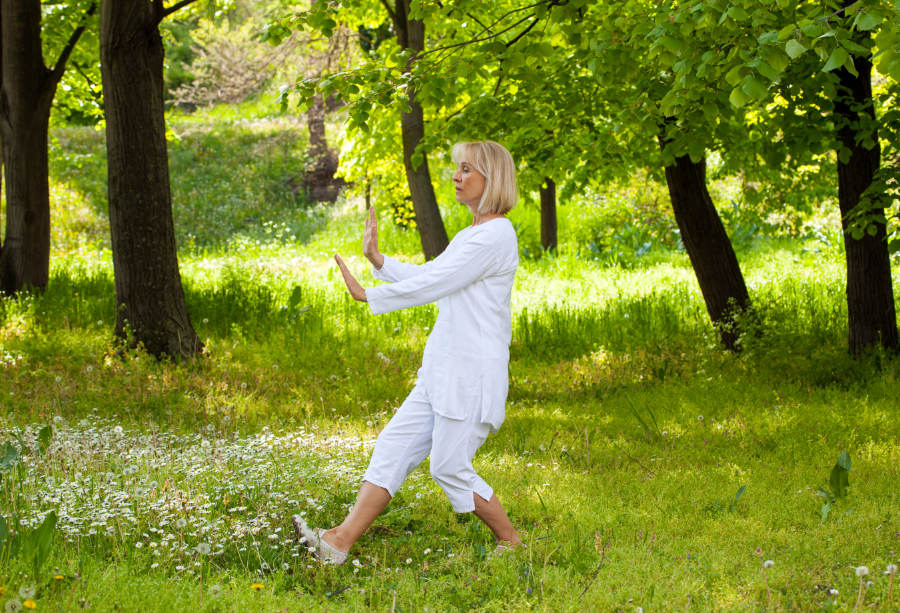
Mature couple enjoying practicing tai chi outdoors

Becoming a Tai Chi instructor is not simply a matter of knowing the form or having practiced for a certain number of years. Teaching Tai Chi carries responsibility—for student safety, accurate transmission, and long-term development. While many people teach informally, professional instruction requires a deeper level of skill, clarity, and ethical commitment.

Practicing Tai Chi vs. Teaching Tai Chi

One of the most important distinctions for aspiring instructors is the difference between personal practice and professional teaching.

  • Personal skill development
  • Internal awareness and refinement
  • Health, balance, and longevity
  • Individual exploration

Teaching Tai Chi requires:

  • Clear verbal and visual explanation
  • The ability to observe and correct others
  • Adapting movements for different bodies
  • Managing group dynamics and safety

Making this transition requires a shift in mindset—from student to guide, from personal insight to shared understanding.

What It Really Takes to Become a Certified Tai Chi Instructor

Certification is not just a credential—it is a validation of readiness. Legitimate programs assess far more than form memorization.

Modern certification programs evaluate:

  • Technical proficiency and internal understanding
  • Teaching presence and communication skills
  • Knowledge of safety, ethics, and liability
  • Consistency of practice and professionalism

Certification also opens doors to:

  • Teaching in wellness and healthcare settings
  • Leading workshops and retreats
  • Online and hybrid instruction
  • Long-term career sustainability

Beyond Technique: What Makes a Great Tai Chi Instructor

Technical skill is necessary—but it is not sufficient. The best instructors create environments where students feel safe, seen, and supported.

Great Tai Chi instructors excel in:

  • Teaching presence rather than performance
  • Clear, adaptable communication
  • Reading student body language and effort levels
  • Correcting without causing tension or discouragement
  • Cultivating trust and long-term commitment

Emotional intelligence is just as important as physical skill when guiding students through a lifelong practice.

How Long Does It Actually Take to Become an Instructor?

There is no fixed timeline for becoming a Tai Chi instructor. Progress depends more on quality, consistency, and guidance than on calendar years.

Factors that influence readiness include:

  • Regular, focused practice
  • Access to skilled mentorship
  • Willingness to receive correction
  • Experience teaching beginners
  • Ability to articulate principles clearly

Many practitioners stall by waiting for perfection. Instructor readiness is about competence, responsibility, and continued growth.

Choosing Between Traditional and Modern Certification Paths

Tai Chi certification today exists along a spectrum—from classical lineage-based systems to modern standardized programs.

Traditional certification emphasizes:

  • Direct transmission from teacher to student
  • Long-term apprenticeship models
  • Cultural and historical continuity

Modern certification often focuses on:

  • Structured curricula and assessment
  • Accessibility across regions
  • Consistent teaching standards
  • Global recognition

Both paths can be legitimate when approached thoughtfully. The right choice depends on your goals, learning style, and teaching environment.

Teaching Tai Chi in the Modern World: Online and Hybrid Models

The rise of online education has expanded opportunities for Tai Chi instructors—but it also introduces new responsibilities.

Teaching online requires:

  • Clear camera angles and movement visibility
  • Strong verbal cueing and pacing
  • Heightened safety awareness
  • Creative engagement strategies

Hybrid models combine in-person depth with online reach, allowing instructors to scale responsibly while maintaining teaching quality.

Ethics, Responsibility, and Professional Integrity

At its core, teaching Tai Chi is an act of stewardship. Instructors are responsible not only for technique, but for:

  • Student safety and well-being
  • Honest representation of skill level
  • Respect for lineage and tradition
  • Ongoing education and refinement

Professional integrity is what separates casual instruction from meaningful teaching.

The Path Forward: Teaching as a Lifelong Practice

Becoming a Tai Chi instructor is not a finish line—it is a commitment to continued learning, refinement, and service. The most respected teachers remain dedicated students themselves.

For those willing to train deeply, teach responsibly, and uphold standards, Tai Chi instruction offers:

  • A meaningful career path
  • Lifelong personal development
  • The opportunity to positively impact others
  • A role in preserving and evolving the art

Ready to Take the Next Step?

We invite you to take your Tai Chi to the next level through our membership program.  Whether you want to eventually become a certified Tai Chi instructor or you just want to ensure you are in the best shape of your life using Tai Chi, our membership and community will help you with educational videos and a path to your best health.  You can get started with our Tai Chi Community for free to see what the community is talking about.

Filed Under: Tai Chi

4 Reasons Cupping Therapy Can Aid in Recovery

March 25, 2025 by Dr. Daniel Hoover

Cupping therapy has been used for recovery for thousands of years. Recently many athletes have begun to use cupping therapy in their recovery plans. This can be seen by the distinctive round marks that are left after a session. Though they may look like bruising, this is caused by the suction effect caused by cupping and is generally painless, unlike bruises. These marks can also tell us about how well the recovery is going, the lighter the mark, the better your recovery.

In today’s article, we’re going to go over four reasons why cupping therapy can aid in your recovery.

Improved Blood Circulation

Cupping therapy may significantly improve your body’s blood circulation and this is vital for recovery. By creating a vacuum in the cup, the skin, fascia, and muscle tissue are pulled up into the cup drawing fresh oxygenated, and nutrient-rich blood into the targeted areas. This can improve circulation while reducing inflammation, potentially promoting faster healing of the muscles and tissues in pain.

When the body has better circulation, it can more easily remove metabolic waste and toxins. When your blood flow is sluggish, some toxins may accumulate in the body making recovery slower. Cupping therapy can promote the removal of these built-up toxins, with regular cupping therapy, people may notice improved flexibility, reduced pain, and a faster return to physical activity.

Reduced Muscle Soreness

Cupping therapy is an effective therapy for relieving muscle tension and soreness. As the tissue is pulled into the cup, this gently lifts the skin and fascia, which allows the muscles to relax. This process aids in reducing stiffness while promoting flexibility and faster recovery. By reducing tension around the targeted area, cupping therapy can improve your range of motion.

Another benefit of cupping therapy is it stimulates the release of endorphins, which is the body’s natural pain reliever. This helps to reduce the discomfort levels in the overworked or injured muscles. With less discomfort, it’s more likely for you to get higher quality and more consistent sleep. Withhigher-qualityy sleep, the body can better focus on recovery.

Detoxification

Cupping therapy may stimulate the lymphatic system which plays an important role in flushing toxins from the bodies. The suction effect encourages the movement of lymph fluid which helps with removing waste products. This detoxification process helps prevent inflammation and speeds up recovery.

Cupping therapy also reduces swelling and stiffness by improving lymphatic drainage. It is typically effective for people recovering from injuries or managing swelling caused by conditions like arthritis or injuries. Regular cupping therapy can support the body’s natural detoxification process which may enhance overall wellness.

Accelerates Healing

Cupping therapy may promote faster healing by improving blood flow and reducing inflammation within the injured areas. As the cups pull the tissues, fresh blood is pulled into the targeted area, this additional fresh blood helps to accelerate cellular repair. This process is particularly beneficial for soft tissue injuries, such as sprains, strains, and muscle tears while reducing the probability of scar tissue forming.

This also helps to keep the muscles and fascia loose which can reduce long-term mobility issues. This reduction in tension can also reduce stress levels. High levels of stress have been shown to hinder the body’s ability to recover. Cupping therapy has become popular among athletes and people recovering from physical trauma or injury as part of their physical recovery.

Take the Next Step In Improving Your Health by Contacting SOHMA Integrative Medicine

Our goal is to help you improve your health. You can contact us and ask about the Myers Cocktail, IV Therapy, Chiropractic care, or how our other health service lines can help you with your journey to improved health. 

Located in Long Beach, CA, we help individuals from the surrounding cities.

We look forward to helping you take the next step to better health.

Filed Under: Uncategorized

  • « Go to Previous Page
  • Page 1
  • Page 2
  • Page 3
  • Page 4
  • Page 5
  • Interim pages omitted …
  • Page 36
  • Go to Next Page »

Footer

Contact Us

SOHMA Integrative Medicine – Long Beach

Email
drdanielhoover@sohma.org

Follow Us on Instagram Instagram


WCAG

The Web Content Accessibility Guidelines (WCAG) defines requirements for designers and developers to improve accessibility for people with disabilities for websites, such as for SOHMA Integrative Health Center. It defines three levels of conformance: Level A, Level AA, and Level AAA. SOHMA is partially conformant with WCAG 2.1 level AA. Partially conformant means that some parts of the content do not fully conform to the accessibility standard.

Our goal here at SOHMA is to make our website accessible to all visitors; unfortunately, our goal for 100% accessibility is not yet complete. Our goal is to provide universal access to our website by following WCAG 2.0 (current WCAG 2.1) A, AA guidelines; however, this will be a work in progress.

Feedback

We welcome your feedback on the accessibility of SOHMA’s website. Please let us know if you encounter accessibility barriers on our website. We are here to help. You can reach us below at:

  • Email: assistant@sohma.org

  • Location: 2041 East St, Suite 1453, Concord, California, 94520, US

We try to respond to feedback within 5 business days.

SOHMA Integrative Medicine

Connect With Us

VA Authorized

SOHMA | Privacy Policy | Copyright © 2026

Designed by ITSOPRO