• Skip to main content
  • Skip to footer

SOHMA Integrative Medicine

We offer the best of Eastern & Western medicine without using drugs or surgery

  • Tai Chi
    • Tai Chi Benefits
    • Tai Chi Instructors
    • Online Tai Chi Certification Program
  • Physical Medicine
    • Chiropractic Care
      • VA Authorized Care
      • Sports Medicine
      • Digital X-Rays
    • Physiotherapy
    • Spinal Decompression
    • Laser Therapy
    • Shockwave Therapy/Piezowave
    • Cupping Therapy
    • Acupuncture
    • Herbal Pharmacy
    • VA Authorized Care
  • Blogs
  • About
    • Our Providers
    • Tai Chi Instructors
  • Contact Us

Dr. Daniel Hoover

Teaching, Leadership, and Legacy in Tai Chi

February 3, 2026 by Dr. Daniel Hoover

How Responsible Teaching Shapes Students, Deepens Practice, and Preserves the Art

Teaching Tai Chi is not merely an extension of personal practice—it is a role that carries influence, responsibility, and lasting impact. Every Tai Chi teacher, whether leading a small community class or training future instructors, shapes how students experience the art and how Tai Chi itself evolves over time.

This pillar article explores Tai Chi teaching as a path of leadership and stewardship, bringing together three essential dimensions:

  • Creating transformational learning experiences for students
  • Upholding ethical responsibility and professional standards
  • Using teaching as a catalyst for deepening one’s own practice

Together, these elements define what it means to teach Tai Chi with integrity—and what kind of legacy a teacher leaves behind.

Teaching Tai Chi Is an Act of Leadership

Leadership in Tai Chi does not resemble hierarchy, dominance, or control. It is expressed through presence, consistency, and example. Students learn as much from how a teacher moves, listens, and responds as from what they say.

Tai Chi teachers lead by:

  • Modeling calm and regulation under pressure
  • Demonstrating patience and clarity in instruction
  • Upholding standards without ego
  • Creating learning environments built on trust

This form of leadership is subtle but powerful. It shapes student behavior, expectations, and long-term commitment far more effectively than authority alone.

Creating Transformational Student Experiences

Technical instruction alone does not transform students. Transformation occurs when teaching meets the student as a whole person—body, nervous system, emotions, and learning capacity.

Transformational Tai Chi teachers focus on:

  • Creating physically and emotionally safe learning environments
  • Adapting instruction to individual bodies and nervous systems
  • Supporting long-term progression rather than short-term performance
  • Using emotional intelligence to guide pacing and correction
  • Teaching from a coherent philosophy rather than a collection of techniques

When students feel safe, understood, and capable of progress, learning accelerates naturally.

This approach is explored in depth in How Tai Chi Teachers Create Transformational Student Experiences, which examines how safety, individualized correction, emotional intelligence, and teaching philosophy work together to create lasting change.

Ethics: The Invisible Structure Supporting the Art

Ethics are not optional in Tai Chi teaching. Because Tai Chi influences physical health, emotional regulation, and long-term well-being, ethical responsibility forms the invisible structure that holds the art together.

Ethical teaching includes:

  • Prioritizing student safety above all else
  • Maintaining clear professional boundaries
  • Representing skills, credentials, and lineage honestly
  • Avoiding misinformation, exaggerated claims, or mystification
  • Respecting lineage without rigidity or dogma
  • Upholding professional standards in teaching conduct

Without ethical grounding, even technically skilled instruction can cause harm—quietly and cumulatively.

These responsibilities are examined thoroughly in The Ethics and Responsibility of Teaching Tai Chi, which frames ethics not as restriction, but as protection—for students, teachers, and the future of the art.

Teaching as Stewardship, Not Ownership

Tai Chi teachers do not own the art. They temporarily carry and transmit it. This makes teaching an act of stewardship rather than authority.

Stewardship means:

  • Preserving clarity instead of diluting principles
  • Passing on methods accurately and responsibly
  • Protecting students from harm or exploitation
  • Leaving the art stronger, not distorted

Every teacher contributes to Tai Chi’s future, whether intentionally or not. Ethical stewardship ensures that contribution is constructive.

Why Teaching Deepens the Teacher’s Own Practice

One of the most overlooked truths in Tai Chi is that teaching refines the teacher. Explaining principles, demonstrating movements, and responding to student questions exposes gaps in understanding that solo practice can hide.

Through teaching, practitioners:

  • Clarify their understanding by articulating it
  • Strengthen embodiment through repeated demonstration
  • Increase accountability and consistency in their own practice
  • Develop heightened sensitivity and observational skill
  • Engage in lifelong refinement rather than stagnation

Teaching transforms Tai Chi from a personal pursuit into a shared responsibility—and in doing so, deepens the practitioner’s own path.

This dynamic is explored fully in Why Teaching Tai Chi Deepens Your Own Practice, which examines how accountability, embodied learning, and leadership development naturally arise through teaching.

Leadership That Extends Beyond the Studio

Teaching Tai Chi cultivates leadership qualities that extend far beyond movement instruction. Teachers learn to:

  • Regulate their own nervous systems under pressure
  • Communicate clearly and compassionately
  • Make ethical decisions with real consequences
  • Hold space for others’ growth without ego

These skills influence how teachers show up in their communities, professions, and relationships. Tai Chi teaching becomes a training ground for grounded, ethical leadership.

Legacy: What Remains After the Class Ends

Every Tai Chi teacher leaves a legacy. That legacy may include:

  • Students who practice safely and confidently
  • Teachers who uphold standards and ethics
  • A community culture of respect and patience
  • A clear, trustworthy representation of Tai Chi

Legacy is not built through scale, branding, or recognition. It is built through consistency, integrity, and care over time.

Teaching Tai Chi as a Lifelong Path

Teaching Tai Chi is not a destination reached after mastery—it is a continuation of practice that demands humility, responsibility, and ongoing learning.

When teaching is approached as leadership and stewardship:

  • Students are protected and empowered
  • Teachers continue to grow rather than stagnate
  • Tai Chi remains credible, effective, and alive

This is how Tai Chi survives not just as a form, but as a living art.

Where to Go Deeper

We invite you to deepen your Tai Chi practice through our ongoing membership and community. Whether your goal is personal health, stress resilience, or developing the skills to teach Tai Chi in the future, our program provides structured guidance, educational videos, and a supportive learning environment. You’re welcome to begin with free access to our Tai Chi Community and explore the conversations, insights, and resources available.
Filed Under: Uncategorized

The Hidden Cost of “Collecting Forms” in Tai Chi Practice

January 29, 2026 by Dr. Daniel Hoover

Tai Chi is widely practiced for its ability to cultivate balance, coordination and calm through focused, mindful movement. Over time, its slow precise nature reveals benefits that extend beyond only your physical health. Tai Chi has been shown to offer significant mental health benefits as well. This includes reducing stress, anxiety as well as depression. Though there is a difference between learning and understanding the forms in Tai Chi and simply learning how to perform the movements involved.

Less is More

Although many eager students may assume accumulation of new forms is the way to progress in Tai Chi, yet it only creates an illusion of advancement while diluting attention across too many movement patterns. Instead, students should refine their sensitivity, build structure, and intent. Practitioners who lack this tend to revert to beginners with each additional sequence as the mind and body resets into imitating the teacher. This can interrupt the slow consolidation that internal change requires. Remember, Tai Chi is not linear where you learn a new form until there are no more to learn, it’s meant to fundamentally change your habits in order to better your lifestyle.

Depth versus Breadth 

In Tai Chi, depth refers to mastering core principles, and body mechanics. Whereas breadth means to learn many forms or techniques. Much like the movements in Tai Chi, there is no rush, practicing a single form over years can reorganize posture, and intent in a way that a number of lightly trained forms never will. Breadth rewards memory, while depth reshapes the body and mind.

Confusion through Overexposure

When multiple forms are being learned all together, they can become muddied. This blurs the mechanics together, and for an unintegrated body it can result in misalignments, improper weight shifts and other potential contradictions. Over time the forms and movements may appear correct, but feel incorrect or vague.

Building Skill or Distracting from Progress

Learning new material can be useful when it exposes a weakness in the student, or challenges habits that have already stabilized. For example, a student has spent time mastering a slow form, and has a stable sense of rooting and weight transfer. When introduced to a shorter, quicker form, they may lose that sense of connection in transitions and begin to overuse their hips. The new material now reveals that their structure only worked under ideal conditions. This can cause the student frustration, and in order to avoid this they move to another more comfortable form which offers stimulation without demanding change.

Disciplined Skill Progression

This critique doesn’t necessarily target fundamentals or mastery in general, instead it looks at the specific habit of accumulation forms, and instant gratification. The downsides of only learning many different forms is rarely stated. While a student may be able to learn forms quickly and perform them successfully, when under pressure or stress they may struggle with balance or have inconsistencies in their structure ultimately deviating from the original form.

We invite you to take your Tai Chi to the next level through our membership program.  Whether you want to eventually become a certified Tai Chi instructor or you just want to ensure you are in the best shape of your life using Tai Chi, our membership and community will help you with educational videos and a path to your best health.  You can get started with our Tai Chi Community for free to see what the community is talking about.

Filed Under: Uncategorized

Why Most Tai Chi Training Fails to Transfer Into Real Life—and How to Fix That

January 28, 2026 by Dr. Daniel Hoover

Tai Chi is known as meditation in motion, a gentle, mind-body Chinese martial art that combines slow flowing movement, deep breathing and focused attention. Nowadays you can occasionally see a group of practitioners at parks performing and mastering the forms. Though just training the body doesn’t always transfer to real life.

Today we’ll go over why there are difficulties transferring what you learn in Tai Chi to real life and how to fix that.

Disconnect Between Class and Life

For many people it’s difficult to make time to join a Tai Chi class, and while doing it at home does provide some benefit, many Tai Chi practitioners may revert to tension, rigidity or uneven breaths when practicing at home alone. This is because a class produces a controlled environment, where practitioners can adjust their movements and breathing along with the class especially for beginners as the body may treat Tai Chi as an activity instead of a way of moving. 

Limits of Only Learning Forms

Besides learning proper form, it’s important to remember that Tai Chi is a form of meditation. Practicing forms alone may improve your ability to memorize and coordinate the movement, though it rarely alters ingrained movement patterns, or stress responses. Since habits are reinforced by repetition under realistic conditions, not by idealized movement you perform in isolation. While training the forms alone can benefit the practitioner, after some time without additional challenges to your balance, timing, or decision making, the nervous system does not have a reason to apply Tai Chi principles outside of practice. A good instructor can help you to find the appropriate level of challenge needed in order to gain more benefits.

Training Principles that Carry into Life

For Tai Chi to transfer into real life, its principles must be trained where they will be used. This includes during everyday actions, emotional pressures and stress. Concepts taught through Tai Chi such as alignment, weight transfer, relaxation under load and continuous modifications can be practiced almost anywhere, whether you’re walking, standing or even dealing with mild stressors. Once the principles of Tai Chi are embedded into your common movements, Tai Chi is no longer just an exercise, it becomes part of your default behavior.

Embodiment versus Performance

Performance based practice generally prioritizes how a movement looks, which is a great starting point, though not the end goal. embodiment however, focuses on how movement is structured and felt internally. It’s not uncommon for students to learn how to appear to perform concepts like softness, balance or flow while not actually understanding them under challenge. The true embodiment of Tai Chi requires feedback, variation and occasional disruption. This way principles are maintained even when the form needs to be adjusted to accommodate the student’s mobility.

Teaching Skills that Transfer

Your Tai Chi instructor plays a crucial role in whether Tai Chi remains an exercise or becomes a functional tool for day to day activities. Teaching students to transfer Tai Chi into real life means designing exercises that adapt the principles of Tai Chi across multiple contexts including, speed, experience levels, and range of motion. By emphasizing integration into daily movement, teachers can help students carry Tai Chi beyond the class and into real life.

We invite you to deepen your Tai Chi practice through our ongoing membership and community. Whether your goal is personal health, stress resilience, or developing the skills to teach Tai Chi in the future, our program provides structured guidance, educational videos, and a supportive learning environment. You’re welcome to begin with free access to our Tai Chi Community and explore the conversations, insights, and resources available.
Filed Under: Tai Chi

Traditional vs. Modern Tai Chi Certification: What You Need to Know

January 22, 2026 by Dr. Daniel Hoover

As Tai Chi continues to grow globally, the path to becoming a certified instructor has evolved. Today, practitioners are often faced with a choice between traditional, lineage-based training and modern, standardized certification programs. Understanding the differences between these approaches is essential for anyone considering teaching Tai Chi professionally. Each path carries distinct advantages, limitations, and responsibilities, and the right choice depends on your goals, values, and the students you hope to serve.

Understanding Traditional Tai Chi Lineage

Traditional Tai Chi certification is rooted in lineage. Knowledge is passed directly from teacher to student, often over many years of close mentorship. In this model, legitimacy comes not from a formal credential, but from recognition by a senior teacher within a specific lineage.

Training in a traditional system emphasizes immersion, personal correction, and gradual transmission of skill. Students often spend years refining a limited number of forms while deepening their understanding of internal principles. Teaching authority is typically granted when a teacher believes the student embodies the art sufficiently to pass it on.

This approach preserves depth, nuance, and cultural continuity. However, it can also be opaque. Standards are rarely documented, progress can be subjective, and expectations may vary widely between teachers. For modern practitioners seeking clarity or professional recognition, this lack of structure can be challenging.

The Rise of Modern Tai Chi Certification Programs

Modern certification programs emerged in response to the growing demand for Tai Chi instruction in wellness centers, healthcare settings, and online platforms. These programs aim to create clear standards for teaching competence, safety, and professionalism.

Modern certifications typically include structured curricula, defined assessment criteria, and documented learning outcomes. Rather than relying solely on personal endorsement, they evaluate instructors on their ability to teach fundamentals, communicate principles, and ensure student safety.

For many practitioners, this approach provides transparency and accessibility. It allows students from diverse backgrounds to pursue instructor training without requiring decades of exclusive lineage immersion. It also offers credentials that are more easily recognized in contemporary professional environments.

Differences in Teaching Emphasis

Traditional systems often focus deeply on internal development before allowing teaching. Students may practice extensively before being introduced to pedagogical concepts. Teaching, when it comes, is often informal and modeled after how the teacher themselves was taught.

Modern programs place greater emphasis on teaching methodology from the outset. Instructor candidates learn how to structure classes, work with beginners, modify movements, and communicate clearly. This pedagogical focus helps prepare instructors to work with a wide range of students, including those new to movement practices.

Neither approach is inherently superior; they simply prioritize different aspects of the art.

Cultural Preservation vs. Modern Adaptation

Lineage-based training plays a vital role in preserving Tai Chi’s historical and cultural roots. It maintains continuity with traditional philosophies, training methods, and martial applications. For practitioners deeply interested in cultural authenticity, this can be profoundly meaningful.

Modern certification programs, on the other hand, often adapt Tai Chi to contemporary contexts. They may integrate modern anatomy, neuroscience, and teaching science to make the practice more accessible and safer for today’s students. This adaptation allows Tai Chi to reach broader audiences without sacrificing core principles.

The key is balance—respecting tradition while meeting modern needs.

Recognition and Professional Credibility

In traditional settings, recognition comes from within the lineage. Outside of those circles, however, lineage credentials may be difficult for institutions or students to evaluate. Modern certifications offer standardized documentation that is easier to understand in professional environments such as gyms, wellness centers, and healthcare facilities.

For instructors seeking to teach publicly, online, or internationally, modern certification can provide practical advantages. It establishes clear expectations and reassures students that the instructor meets defined standards.

Choosing the Right Path for Your Goals

The choice between traditional and modern certification depends largely on your intentions. If your goal is deep personal study within a specific lineage, traditional training may be ideal. If you aim to teach professionally, work with diverse populations, or build a scalable teaching career, modern certification may be more practical.

Some of the most effective instructors combine both approaches—grounding themselves in traditional principles while pursuing modern certification to ensure clarity, safety, and professional credibility.

Why This Decision Matters

Certification shapes how you teach, how you are perceived, and how you contribute to the Tai Chi community. It influences your confidence, your opportunities, and your ability to serve students responsibly.

Understanding the differences between traditional and modern Tai Chi certification empowers you to make an informed choice. When aligned with your values and goals, the right path supports not only your growth as an instructor, but the integrity and future of Tai Chi itself.

Ready to Get Started?

If you’re ready to build a consistent, meaningful Tai Chi practice, our membership program offers a clear path forward. Designed for both dedicated practitioners and those simply seeking better health and balance, our community provides expert instruction, progressive learning, and shared support. You can start by joining our Tai Chi Community for free and experience how ongoing practice and connection can elevate your journey.

Filed Under: Tai Chi

The Difference Between Practicing Tai Chi and Teaching Tai Chi

January 20, 2026 by Dr. Daniel Hoover

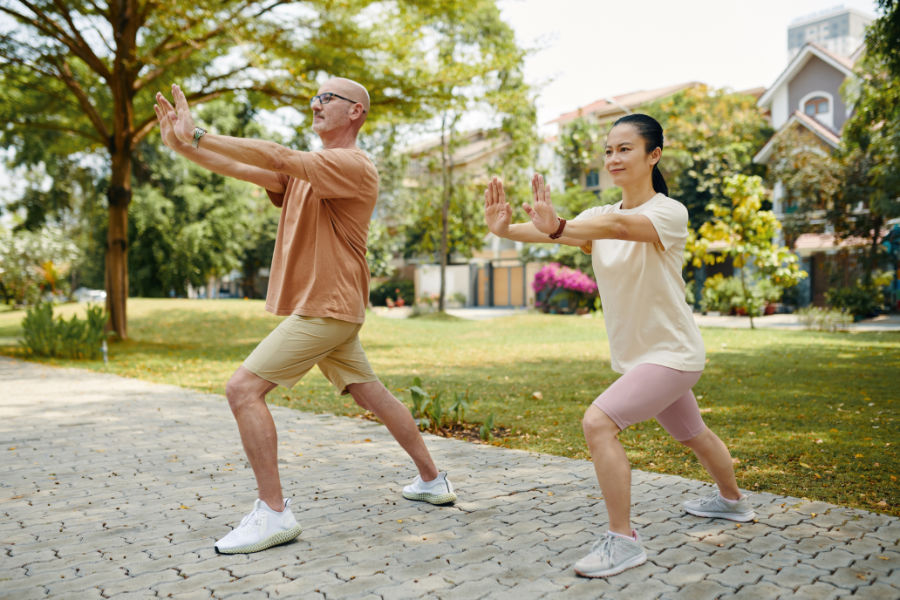
Many Tai Chi practitioners assume that becoming skilled in the art naturally qualifies them to teach it. While strong personal practice is essential, teaching Tai Chi is a fundamentally different discipline. Practicing develops your own body and awareness; teaching requires responsibility for someone else’s learning, safety, and progress. Understanding this distinction is crucial for anyone considering instructor certification or leadership within the Tai Chi community.

Practicing Tai Chi Is an Internal, Personal Process

Personal practice is primarily inward-facing. When you practice Tai Chi for yourself, your focus is on how movements feel, how your balance improves, and how your awareness deepens over time. You move at your own pace, repeat sections as needed, and work through challenges privately.

In this context, mistakes are part of learning and carry limited consequence. If your posture is slightly off or your timing inconsistent, the only person affected is you. Personal practice allows exploration, experimentation, and gradual refinement without pressure to explain or justify what you are doing.

This internal focus is essential for developing genuine Tai Chi skill, but it does not automatically translate into teaching ability.

Teaching Tai Chi Is an External, Relational Skill

Teaching shifts the focus outward. Instead of asking, “How does this feel in my body?” you must ask, “What does this student need right now to move safely and effectively?” This requires the ability to observe others accurately and prioritize corrections that will have the greatest positive impact.

Teaching also involves managing group dynamics, pacing lessons, and creating an environment where students feel supported rather than overwhelmed. Instructors must communicate clearly, adjust language for different learning styles, and respond to questions thoughtfully—all while maintaining their own presence and composure.

Safety Becomes a Central Responsibility

One of the most significant differences between practicing and teaching Tai Chi is responsibility for safety. When you teach, your instructions directly affect the physical well-being of your students. This means understanding joint mechanics, recognizing limitations, and knowing how to modify movements for injuries, age, or mobility challenges.

A movement that feels comfortable in your own body may be inappropriate or unsafe for someone else. Teaching requires humility—the willingness to prioritize student safety over demonstrating advanced or impressive techniques.

Teaching Requires Structural Understanding, Not Just Movement

Practitioners often rely on feeling to guide their own movement. Teachers must go further by understanding structure and mechanics in a way that can be explained and replicated. This includes knowing why a posture works, how weight transfers through the body, and what alignment supports balance and efficiency.

Without this structural understanding, instructors may struggle to correct errors or adapt instruction. Teaching forces clarity; vague explanations that make sense internally often fall apart when spoken aloud.

Communication Is a Skill of Its Own

Practicing Tai Chi does not require verbalization. Teaching does. Instructors must develop the ability to translate subtle internal experiences into simple, actionable guidance. This often involves using imagery, demonstrations, and physical cues that resonate with students.

Good communication also includes listening—hearing student concerns, recognizing confusion, and adjusting instruction accordingly. Teaching is a dialogue, not a performance.

Teaching Changes Your Relationship to the Art

Once you begin teaching, Tai Chi becomes more than a personal practice. It becomes a responsibility to uphold standards, represent the art accurately, and contribute positively to the community. Instructors serve as examples, whether they intend to or not.

This role often deepens an instructor’s own practice. Teaching highlights gaps in understanding and encourages continued learning. Many instructors find that their personal skill improves significantly once they begin teaching because they must continually refine their explanations and demonstrations.

Why This Distinction Matters for Certification

Reputable Tai Chi certification programs recognize that practicing and teaching are distinct skill sets. Certification is not about proving how advanced your movements are; it is about demonstrating that you can teach fundamentals safely, clearly, and responsibly.

Programs that emphasize mentorship, supervised teaching, and principle-based understanding help bridge the gap between practitioner and instructor. They prepare students not just to move well, but to lead others effectively.

A Shift in Mindset

The transition from practitioner to teacher is less about reaching a certain level of skill and more about shifting perspective. It requires moving from self-development to service, from internal exploration to external responsibility.

Understanding the difference between practicing and teaching Tai Chi helps practitioners make informed decisions about when and how to step into an instructional role. When approached with humility and preparation, teaching becomes one of the most rewarding ways to deepen your connection to the art.

Ready to Learn More?

We invite you to deepen your Tai Chi practice through our ongoing membership and community. Whether your goal is personal health, stress resilience, or developing the skills to teach Tai Chi in the future, our program provides structured guidance, educational videos, and a supportive learning environment. You’re welcome to begin with free access to our Tai Chi Community and explore the conversations, insights, and resources available.
Filed Under: Tai Chi

  • « Go to Previous Page
  • Page 1
  • Page 2
  • Page 3
  • Page 4
  • Interim pages omitted …
  • Page 36
  • Go to Next Page »

Footer

Contact Us

SOHMA Integrative Medicine – Long Beach

Email
drdanielhoover@sohma.org

Follow Us on Instagram Instagram


WCAG

The Web Content Accessibility Guidelines (WCAG) defines requirements for designers and developers to improve accessibility for people with disabilities for websites, such as for SOHMA Integrative Health Center. It defines three levels of conformance: Level A, Level AA, and Level AAA. SOHMA is partially conformant with WCAG 2.1 level AA. Partially conformant means that some parts of the content do not fully conform to the accessibility standard.

Our goal here at SOHMA is to make our website accessible to all visitors; unfortunately, our goal for 100% accessibility is not yet complete. Our goal is to provide universal access to our website by following WCAG 2.0 (current WCAG 2.1) A, AA guidelines; however, this will be a work in progress.

Feedback

We welcome your feedback on the accessibility of SOHMA’s website. Please let us know if you encounter accessibility barriers on our website. We are here to help. You can reach us below at:

  • Email: assistant@sohma.org

  • Location: 2041 East St, Suite 1453, Concord, California, 94520, US

We try to respond to feedback within 5 business days.

SOHMA Integrative Medicine

Connect With Us

VA Authorized

SOHMA | Privacy Policy | Copyright © 2026

Designed by ITSOPRO