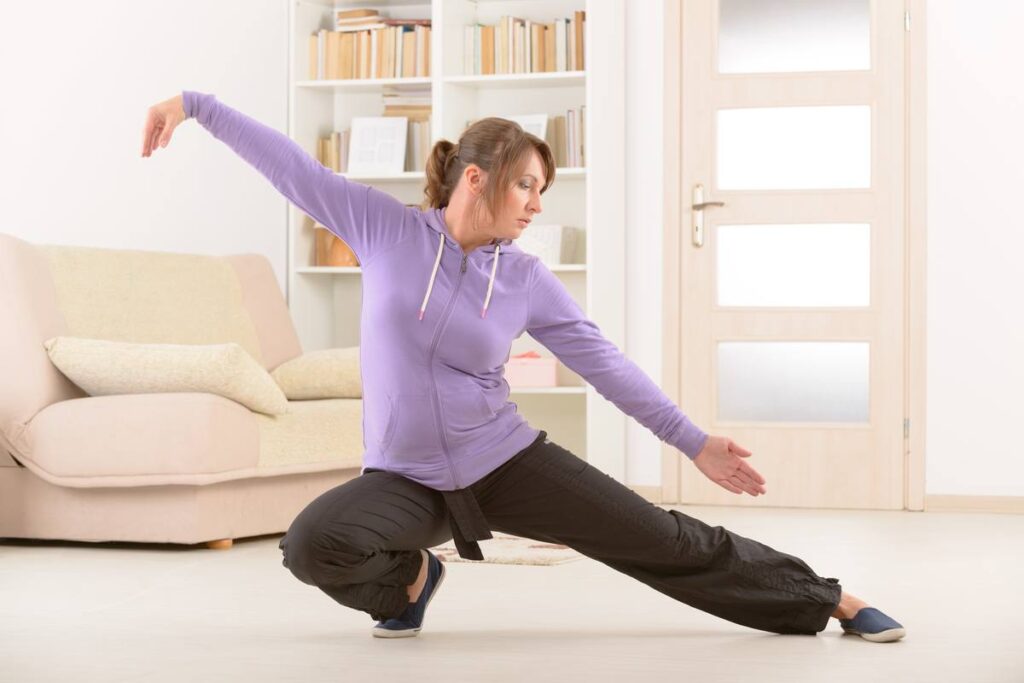
Tai Chi and Yoga are two of the most widely practiced mind body disciplines for stress reduction. Both offer profound benefits for both physical and mental health. Yet despite their shared goals, Tai Chi and Yoga differ significantly in how they approach movement, and breathing as well as long term development.
Understanding these differences can help practitioners choose the practice that best supports their needs at their respective stage of life.
Movement Philosophy
The movement philosophy of Tai Chi and Yoga reflects fundamentally different approaches to the body. Yoga traditionally emphasizes holding postures that stretch, strengthen, and align the body. While many modern styles flow between poses, the practice often includes moments of stillness and muscular engagement that challenge your flexibility and endurance.
Tai Chi, by contrast, is built entirely around nonstop motion. Movements flow seamlessly from one posture to the next without stops or holds. The emphasis isn’t on stretching or exertion, instead it’s on smooth transitions, weight shifting, and maintaining relaxation while performing the postures. In Tai Chi however, movements are circular, soft, and uninterrupted. These transitions are as important as the postures themselves, as relaxation under motion is a primary goal. This continuous flow trains the nervous system to remain calm during change, making Tai Chi particularly effective for stress reduction in daily life.
Breathing Styles
Both Tai Chi and Yoga integrate breath with movement, but they do so in distinct ways. Many styles of Yoga use structured breathing techniques such as counted breathing, breath retention, or forceful exhalations. These methods can be powerful tools for regulating energy and focus, but they require deliberate control.
Tai Chi employs a more natural and unforced approach to breathing. Breath is not manipulated directly, it is allowed to settle into a slow rhythm as tension releases from the body. Breathing in Tai Chi is characterized by rhythmic breathing and coordination with movement instead of control, with an emphasis on softness and continuity. For individuals experiencing high stress or anxiety, this gentle breathing style can feel more accessible and less demanding.
Energy Cultivation
Energy cultivation is central to both practices, though the focus differs. Yoga often works with energy through posture, breath, and internal locks, aiming to awaken and move energy along specific pathways. This can feel invigorating and transformative, particularly in more dynamic styles.
Tai Chi approaches energy cultivation through efficiency and relaxation. By releasing unnecessary tension and improving alignment, energy is allowed to circulate freely without effort. Tai Chi cultivates energy by reducing muscular resistance while aligning the body for efficient movement. Tai Chi conserves and refines energy, making it especially beneficial for stress-related fatigue and nervous system exhaustion.
Accessibility and Adaptability
Accessibility is a major consideration for stress-reducing practices. Yoga offers a wide range of styles, from gentle restorative classes to physically demanding forms. However, some postures may be challenging for individuals with joint limitations, balance concerns, or limited flexibility.
Tai Chi is inherently adaptable. Movements are performed upright, without the need to transition to the floor, and can be modified easily to suit different abilities.
Tai Chi is often accessible because:
- Movements are low-impact
- Movements are joint-friendly
- Movements are adaptable to flexibility or strength
- Intensity can be adjusted without changing the form
This adaptability makes Tai Chi suitable for a wide range of ages and physical conditions, especially for those seeking stress relief without physical strain.
Long-Term Practice Goals
While both Tai Chi and Yoga offer immediate stress reduction, their long-term goals differ subtly. Many Yoga practitioners focus on flexibility, strength, spiritual exploration, or physical conditioning alongside stress relief.
Tai Chi places a strong emphasis on longevity, resilience, and nervous system regulation over time. The practice evolves gradually, supporting the practitioner through changing physical and emotional needs. Long-term goals in Tai Chi often include sustained balance and mobility, as well as emotional regulation under stress. This can lead to lifelong, sustainable movement. Instead of pursuing peak performance, Tai Chi emphasizes continuity.
Choosing the Right Practice
Tai Chi and Yoga are both valuable paths for managing stress, and neither is inherently superior. Yoga may appeal to those who enjoy structured postures and active engagement, while Tai Chi often resonates with individuals seeking gentle movement, nervous system calming, and long-term sustainability.
By understanding the key differences in movement philosophy, breathing, energy cultivation, accessibility, and long-term goals, practitioners can make informed choices that align with their bodies, lifestyles, and stress management needs.
Dr. Daniel Hoover, DC, LAc, MH, CCSP®, integrates a rare fusion of clinical expertise and martial mastery to elevate the health of his patients and students. As a Doctor of Chiropractic, Licensed Acupuncturist, and 5th degree black belt in Shaolin Kempo, Dr. Hoover serves as the Chief Tai Chi Chuan instructor at the School of Healing Martial Arts™. His journey as an Ironman and Master Herbalist informs his unique understanding of how the body thrives under disciplined practice. To expand his impact beyond the local clinic, Dr. Hoover developed online Tai Chi courses, making these traditional healing arts accessible for any wellness journey. If you are ready to begin, we invite you to explore Tai Chi Mastery under the expert guidance of Dr. Daniel Hoover.