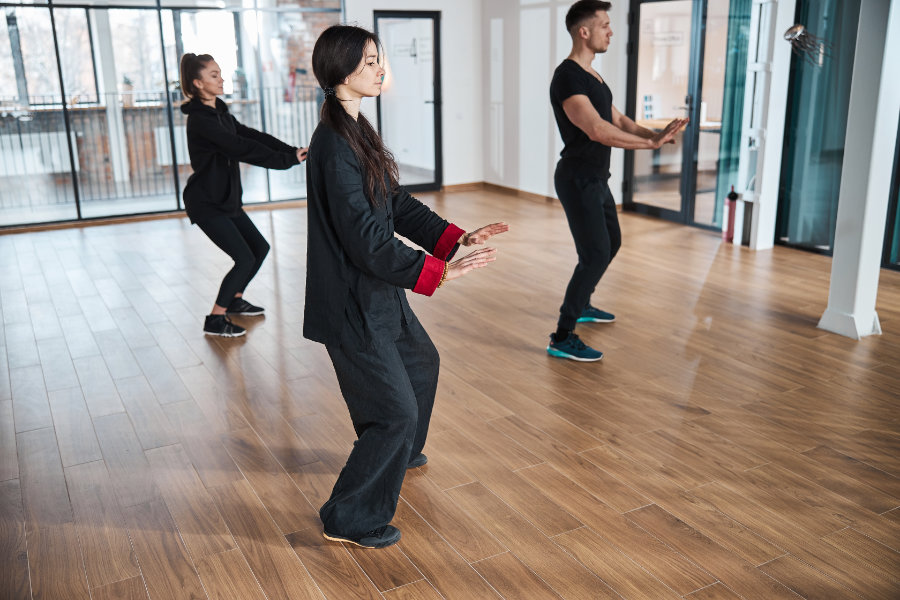
The idea of teaching Tai Chi online once seemed impractical, even contradictory to the art’s deeply embodied and relational nature. Yet in recent years, online instruction has become not only viable but increasingly effective when done correctly. For instructors considering this path, the question is no longer whether Tai Chi can be taught online, but what skills and training are required to do it well and responsibly. Teaching Tai Chi remotely demands a distinct set of competencies that go beyond traditional in-person instruction.
Why Online Tai Chi Teaching Works
Tai Chi’s slow, deliberate movements and emphasis on awareness make it particularly well-suited for remote learning. Unlike high-impact or fast-paced disciplines, Tai Chi allows students time to observe, adjust, and integrate instruction. Online formats also enable students to practice in their own space, often with greater consistency and comfort.
For instructors, online teaching expands reach beyond geographic limits, allowing connection with students worldwide. However, this accessibility also raises expectations. Without physical presence, instructors must rely on clarity, observation, and communication more than ever.
Clear Demonstration Becomes Essential
In an online environment, students rely heavily on what they see. This means instructors must demonstrate movements with precision, consistency, and awareness of camera angles. Poor positioning can obscure critical details such as weight shifts, joint alignment, or transitions.
Effective online instructors learn to move slightly slower than they would in person, emphasizing clarity over flow. They also repeat movements from multiple angles when necessary and use verbal cues to highlight key points. This level of intentional demonstration often improves teaching quality even in live classes.
Communication Must Be More Intentional
Without the ability to make hands-on adjustments, online Tai Chi instructors must develop strong verbal communication skills. Instructions need to be specific, concise, and accessible. Instead of physically guiding a student’s posture, instructors describe sensations, landmarks, and relationships within the body.
Asking thoughtful questions becomes a critical teaching tool. Instructors must encourage students to articulate what they feel, where they struggle, and how movements register in their body. This two-way communication helps compensate for the lack of physical contact and fosters deeper learning.
Observation and Feedback in a Virtual Space
Teaching Tai Chi online requires refined observational skills. Instructors must learn to read subtle cues through a screen—postural habits, balance issues, or tension patterns. This often means focusing on one student at a time during live sessions or reviewing recorded practice.
Providing feedback online also requires sensitivity. Corrections should be prioritized, clear, and encouraging. Overloading students with feedback can be particularly overwhelming in virtual settings. Skilled instructors choose the most impactful adjustments and allow time for integration.
Safety Considerations for Remote Teaching
Safety takes on heightened importance in online instruction. Instructors cannot physically intervene if a student loses balance or moves incorrectly. As a result, online classes must emphasize conservative ranges of motion, clear disclaimers, and self-awareness.
Instructors should encourage students to work within comfort zones, offer modifications proactively, and regularly remind participants to stop if something feels painful or unstable. Understanding how to structure classes for mixed ability levels is especially important when teaching remotely.
Technical Skills and Environment Setup
Beyond teaching skill, online Tai Chi instructors need basic technical competence. This includes stable internet, clear audio, appropriate lighting, and sufficient space for full-body visibility. Camera placement should allow students to see the instructor’s entire body without distortion.
Instructors who invest time in creating a clean, professional teaching environment signal credibility and care. These details may seem minor, but they significantly affect student trust and engagement.
Training for Online Tai Chi Instruction
Not all instructor training prepares practitioners for online teaching. Effective programs address digital pedagogy, class structure, and remote student management. They also help instructors adapt traditional teaching methods to modern platforms without diluting core principles.
Mentorship is particularly valuable in this context. Learning from experienced online instructors shortens the learning curve and helps avoid common pitfalls.
The Future of Tai Chi Instruction
Online teaching is not a replacement for in-person practice, but a powerful complement. It allows greater access, continuity, and scalability while preserving the essence of Tai Chi when approached thoughtfully.
For instructors willing to develop the necessary skills, teaching Tai Chi online opens new opportunities to serve students, build community, and sustain a meaningful teaching career. The key lies in respecting the art while adapting intelligently to the medium.
We invite you to take your Tai Chi to the next level through our membership program. Whether you want to eventually become a certified Tai Chi instructor or you just want to ensure you are in the best shape of your life using Tai Chi, our membership and community will help you with educational videos and a path to your best health. You can get started with our Tai Chi Community for free to see what the community is talking about.